Updated Surplus Numbers

Updated Surplus Numbers
Updated Surplus Numbers: Actual surplus 2018 per audit was $85,163.
Boards 2011-2018 implemented policies and procedures with specific goals:
stabilize owner fees, achieve maintenance objectives and achieve annual budget surpluses.
Any surplus was retained by the association.
The board elected in fall 2018 decided to increase owner fees, even in view of a large potential surplus

Average fees prior to 2019

Average fees prior to 2019
Average fees per owner prior to 2019:
RED indicates the consequences had boards continued the fee policies prior to 2010,
BLUE indicates actual fees. These moderated when better policies and financial controls were put in place by boards

Better budgeting could have resulted in lower fees

Better budgeting could have resulted in lower fees
Better budgeting could have resulted in lower fees:
RED line = actual fees enacted by boards,
BLUE line = alternate, fees, ultimately lower with same association income lower had
boards used better financial controls and focused on long term fee stability

Monday, October 19, 2015

(Community) College of DuPage Builds New Road

0 comments
Bookmark and Share


The Community College of DuPage has built a new road which was described as "proposed." To my knowledge this was not discussed during announced and open zoning board meetings. That was the approach agreed with taxpayers and the county Zoning Board for all new construction on the campus.


The road is in the left of the aerial photo above. There has been a lot of construction on the Glen Ellyn campus since 2012. The new road on the campus required a large curb cut into Fawell/22nd Street and other modifications to the street. This obviously required the approval of the county and /or the Village of Glen Ellyn. One simply can't modify a public road. That approval was apparently given in 2013-2014. I know a lot of people drove on Fawell (22nd street) and saw the work going on. It couldn't be missed. To my knowledge no one asked how this was occurring. I didn't bother because I knew that the politics involved would be a real time waster on my part. The Breuder Brigade and its small army of communications staffers would thwart any attempt on my part. The county apparently preferred to look the other way. I do want to state that this is a wonderful example of how government at all levels is operating solely for special interests. There is absolutely no doubt in my mind that this publicly funded college, the "Community" College of DuPage is simply another special interest which has been operating for its own purpose. It remains to be seen if the college can return to its core mission. And at what cost to the taxpayers and the students.

This is a photo of the new entry road into the college. The buildings in the background are in Wheaton. The road was build along residential buildings and replaces grassy fields. This changes further the character of this residential neighborhood.


So how did this street happen? During the most recent public zoning hearings this new road was described as "proposed." It was never explicitly discussed and approved before residents. It runs along the Village boundary with Wheaton which is backed by homes and apartments. Such a road would require cuts to the curbs on Fawell/22nd street. It also required the removal of grassy medians. One should ask "How could these cuts occur without some approval?"

Here's the earlier "Facilities Master Plan" that was published by the college. This was used in an attempt to get DuPage County resident buy-in for the schemes of the college:
Here is a portion of the "Planned Development Site Plan" as provided by the college during the zoning hearings. This plan is "Revised June 18, 2012". The new road at the far left was connecting to item "A" which was defined as a "new parking lot" in the list of "proposed". 


So how did this road get built?  Here is one explanation. On July 17, 2013 I posted about an article in the Daily Herald. The article was in the Herald on July 14. The title was "A new day for once-feuding Glen Ellyn and COD?"

In the article there was a smiling photo of Glen Ellyn Village President Alex Demos. The article stated "Glen Ellyn's new village president says it's a new day for the village and College of DuPage -- two governmental entities that had a protracted and expensive legal dispute over jurisdictional matters for more than two years." Here is a published photo of Village President Alex Demos. Why is he smiling? Could it be that he personally worked to see that the curb cuts for the new road were approved by the village? All as part of the "new day." One wonders what other deals were struck with the Breuder Brigade. 
:


Friday, October 16, 2015

Lakecliffe and Salisbury Street Construction Update

0 comments
Bookmark and Share


October 16, 2:30pm; Major work is complete. Stripping, cleanup and misc. landscaping remains.


Here's a link directly to the latest and updated post:

http://briarcliffelakes.blogspot.com/2015/10/lakecliffe-reconstruction-is-proceeding.html

Wednesday, October 14, 2015

Some observations from the HOA budgeting process

0 comments
Bookmark and Share


Doing the annual budget in our HOA is always difficult. I wish more owners would attend the budget session but they don't. This year, fewer than 1% attended. We spent about 2 hours discussing the budget for 2016. But only three people in this HOA know that [other than board members, who are also owners.].

The board members take differing positions. I look at it as a balancing act. Balance projected and identified costs for 2016 with anticipated income via fees. Look at reserves very closely for the next 10 years. Take into consideration the possible financial well being and other costs for our 336 owners. Then mix this stew together and Voila' we can arrive at a possible outcome.

Other board members take very different views. Some operate from fear, others don't want to cater to the lowest common denominator. Others sit quietly and play "follow the leader." Frankly, I'm not satisfied with that.

I'm a very pragmatic guy. I know what it costs this HOA for each foreclosure and I do think we have an obligation to the shareholders. It is a balancing act.

For anyone who is interested, I've read reports that most probably anyone living on social security income will get the same amount in a check next year as they did last year. This is also true for many workers. No salary or wage increases for many in 2016. I do take the well being of our shareholders into account when looking into budgets and fees. [Posted at the Social Security Website October 15: "No Cost-of-Living Adjustment for 2016"  by  Jim Borland, Assistant Deputy Commissioner, Communications, SSA  - "The CPI has not risen since the last cost-of-living adjustment in 2015. As a result, your SSI benefit rate and, for most people, your Social Security benefit amount will stay the same in 2016."]

Unfortunately, HOA costs do increase from year to year. This shows up in contracts as well as utility bills. For owners, the problem might be more direct. In recent years health care has become an ever increasing burden and there is no indication that Medicare payments by retirees will be the same in 2016 as they were in 2015. Obamacare had become for many an insurance nightmare.

All I can say is, I'm aware of the bigger picture and I do take that into consideration when planning any finances for 2016.


Friday, October 9, 2015

Budget Meeting 2015

0 comments
Bookmark and Share


Last night was the annual budget meeting. This was an open meeting for all owners to attend. It is, in fact, one of two most important meetings for this HOA. The annual meeting is the other. The annual meeting can and did include various "State of the HOA" reports by board members. The budgeting meeting lays out the entire budgeting process with board discussion and owner observation. There is an opportunity for "Homeowner Comments." The board expects the shareholders of the HOA to provide constructive comments.

Why is this annual budgeting process so important? It will determine not only the fees this year, but also will impact future years. The board knows this and it and management has spent some weeks doing the preparatory work.

Last night, any owner who was present was made fully aware of the following budgeting plans, the projects and methods the board is considering in order to accomplish the next ten years here at BLMH. Details of the following were openly discussed. It was part of a 3-1/2 hour meeting. Now, how much of this do you think a board can compress into 3 pages of a newsletter, along with all of the other business? Answer: Not much. A letter will provide some additional explanation, but it is impossible to compress a 3-1/2 hour meeting into two pages. Here are the core budget discussion items:
  1. Review of 2015 budgeting and costs; How well did the board do last year and what did they miss? What changed? 
  2. Operations and Maintenance projections, by category for 2016.
  3. Projected Total Reserve Expenses 2016-2025.
  4. Projected expenditures for Streets, curbs, catch basins, 2016-2025. 
  5. Projected expenditures for Unit Patios and Decks, 2016-2025.
  6. Projected expenditures for Common Area Decks, Gazebo, Pedestrian Bridges , 2016-2025.
  7. Projected expenditures for Concrete Ponds, Creeks, Walks, 2016-2025. 
  8. Projected expenditures for Drainage, Landscaping and Trees, 2016-2025.
  9. Projected expenditures for completing the Roofs, 2016-2025.
  10. Projected expenditures for Exterior Lighting, 2016-2025. 
  11. Projected expenditures for Water Mains and Related Replacements, 2016-2025.
  12. Projected expenditures for Interior Carpeting, Intercoms, Lighting, Mailboxes, Entry Doors, 2016-2025.
  13. Projected expenditures for Garage Floors, 2016-2025.
It is only after a thorough review of the actual and projected 2015 expenditures for the property that it is possible to discuss the budget for 2016. This is far more complex than anyone's home budget. Fees are determined by looking at real costs, determining the cause of any 2015 "misses", making adjustments for next year knowing what we know about water rate, electricity, contract and other costs. To this is added projections for capital expenditures. Sounds simple, doesn't it? Well, when one compresses weeks of work and a three hour meeting into three sentences, of course it will sound simple. However, this need not be more difficult than it actually is.

It has been a priority to see that the board is aware and informed. We have been thoroughly discussing the issues. We did consider the opinions and concerns of each board member last night. Owners will get a newsletter, but the articles are merely the tip of the iceberg. Many owners forget that board members are owners, too. Many owners also decide to ignore the knowledge and insights of the board. Here is a wake up call: Who is most aware of the situation in a HOA? An owner who lived here for decades and never attends a single meeting, or a board member? One would think the answer is obvious, but some of the oblivious think they are more informed than board members. I do wonder where they get their information so they can come to this conclusion. It certainly wasn't by poring over and reviewing about a thousand pages of reports ad studies in the past year, or building or reviewing tens of thousands of cells in multiple spreadsheets.

So how many owners actually attended the meeting? What would you think would be the answer to that question? Here is an HOA in which only a few years ago some (a very few) owners made complaints about transparency and so on. So the meetings which were announced, were moved to larger facilities to accommodate the alleged interested owners.

So, how many did, in fact, show up last night? Answer: Four. One owner, who came on a personal matter left a few minutes into the meeting. So Three owners remained to observe the budgeting discussions. That's fewer than 1% of the HOA shareholders. I guess the 99.1% had other things to deal with.

Will Owner Fees Increase? 
That's apparently all that owners in our HOA are interested in knowing. "Please, spare me the details or the issues, or the concerns."

When I am asked the critical question, I have a stock answer. Fees need to be adjusted for inflation. Inflation, as we all know is the cost of all goods and services. This HOA purchases electricity, water, and everything from snow removal to landscaping services. Reserves are also annually adjusted for projected inflation.

So, the simple answer is that from year to year, we can and should expect fee increases.

In the budgeting area, HOA boards attempt to predict, with expert opinion, the costs next year as well as for the next ten years, and beyond. Future costs require inflation adjustments when we are planning.

So, what do you think? Will costs increase? Should HOA budgets increase to cover costs which increase over time, just as occurs with our personal water bills, insurance and so on?


Wednesday, October 7, 2015

Budgeting 2016 - Oh, Oh!

0 comments
Bookmark and Share


It's that time of year again for the annual budget meeting. This is one of the more difficult tasks faced by boards. But this task should not be more difficult than necessary. In fact, it is my opinion that boards frequently get caught up in emotional issues and beliefs. These then become translated into positions. Rational discourse can be difficult. It happened last year and it will happen again on Thursday.

Why is this? IMHO, some boards fail to understand the budgeting process. Large numbers can be scary. We may fall back on simplistic arguments "Fees must always increase."

It is essential to establish budgeting priorities, work with management and do our fiduciary duty while operating in accordance with the Illinois Condominium Act. Even doing this, boards can stumble. Some boards were "burned" by oversights. Some members of some boards became a reaction. Others remained oblivious. Some walked when it got difficult.

This HOA apparently ignored the "elephant in the room" for decades. What is that? It's the reserves. Once called a "replacement fund" it was not the main event in the budgeting process for decades. Then in 2002 the board made a momentous decision. It decided to embark on a series of projects which would ultimately costs more than $3,000,0000. Now, that's not necessarily a problem. But it is if a HOA has falling reserve balances and less than $400,000 accumulated reserves, and collects far less than the required amount each year.

How much is $3,000,000? It's $300,000 each year for 10 years. Moving from $180,000 annual reserve collection to more than $300,000 each year is a huge change. How much? More than $30 each month for the average owner. Then add the other requirements for reserves, and requirements for increases to Operations & Maintenance and fees could increase by more than $50 a month. And they did.

A board member with decades of experience and fond of quips would use the expression "follow the money" from time to time. That's what I've been doing since about 2002.

Boards didn't do a good job of communicating the problem to owners. In fact, it remains unclear to me if the boards and presidents fully understood the nature of the problem. Where was that money to go? To new roofs, new driveways and drainage improvements necessary because of the new downspout configurations. This is simple arithmetic. Multiply the cost of one by 44 and add inflation. Voila'.

It was a very, very difficult ten years and today we are not yet complete. Why? Because we've been saving money for ten years while pushing back the replacement of some roofs, etc. So the roof in the building in which I reside is approaching 23 years of age. Not a good thing for a roof designed with a life of 18-20 years.

So What is the Problem?
The chart above shows the possible condition of reserves, looking ahead for a decade. Three board members (Treasurer, Maintenance and Projects/VP) have been working on this for over a month. In fact it was discussed by the entire board during the August meeting.

The chart which is an example and not "cast in stone" would indicate this HOA is doing a good job dealing with the "elephant in the room." It is amazing the transformation that has occurred since 2008. Remember, we have also replaced four sections of water mains and the chart also reflects the early replacement of Lakecliffe and other cul-de-sac street projects.

However, old beliefs are difficult to manage.

Budgeting can be complicated by the fact that boards should attempt to project all of the O&M costs for an entire year and not collect more than necessary. Here at BLMH we are hamstrung by the fact that our budgeting process occurs in October, long before all of the bill have come in and have been paid. In fact, to keep within annual O&M budgets boards may from time to time push current bills into the next year. Not a problem, unless someone doesn't adjust next year's budget to deal with this. From time to time such land mines have been left for new boards. I call that " throwing the new board under the bus." Can't happen? Sorry here at BLMH "been there done that."

Owners don't get very involved here. But from time to time they'll fire a board. Happened once in 2008. Owners were fed up with fee increases which were not well understood by the owner body and not explained by the boards. Some long time board members didn't appreciate being executed or the lack of confidence.

Knowing all of the above, it is easy to understand why some boards or board members might be a bit edgy about the budgeting process.

Do Fees Have to Increase Each Year?
That's one of the long held beliefs. In fact, what needs to occur each year is budgets need to be adjusted for current reality using what is known. This includes Operations, Maintenance and Reserves. Then fees are calculated. Boards are also responsible to the shareholders and are required to uphold the Illinois Condominium Act.

However, using "beliefs" some boards may count the pennies and then arbitrarily increase fees. The amount may be between 3 and 5 percent annually. In their defense, this is also an attempt to smooth budgets from year to year. But is it a backwards approach and in my opinion not proper.

In fact, boards really must focus on 10 year projections as well as annual O&M expenses. Budgeting can be complicated by the fact that boards should attempt to project all of the O&M costs for an entire year and not collect more than necessary. Here at BLMH we are hamstrung by the fact that our budgeting process occurs in October, long before all of the bill have come in and have been paid.

In any one year it is possible that reserves may fall behind, or actual O&M expenditures may increase beyond expectations. Is this a serious problem? No, it is not. Boards can compensate in the next year, can do short term (less than 12 month) borrowings against reserves to handle bills that come in above budgets. Boards can then adjust in the next year.  Simple, really.

So why the difficulty? It is a historical perspective. A few years ago this HOA had about $180,000 in reserves, had maintenance requirements piling up, didn't have an independent reserve study and frankly didn't have a plan.

Today we live in a very different reality. Good Job! Now let's act in accordance with that reality. But old habits are difficult to break.

I find this somewhat amusing. When I was attempting to join the board, there was a populist refrain "Don't elect Norm, your fees will go up!" Fear is a powerful motivator. Of course, no one runs for a board position for the purpose of raising fees? Or do we? Of course, no one would get elected if they published in the bio "I want to raise your fees by 10% a year." But at times I do wonder. Actions speak louder than words. I hope owners are watching. Very few attended last year's budget meeting. They missed some interesting and contentious discussions.


Notes:
1. Updated to correct description of one chart item.
2. We have 4 small residential buildings. The remainder are double the size of the small.  I use 42 as an average.

Monday, October 5, 2015

Lakecliffe Reconstruction is Proceeding - Update

0 comments
Bookmark and Share


Updates Friday, October 16 

2:30pm - Workers are removing construction vehicles. Major work is complete. Stripping, cleanup and misc. landscaping remains. Residents should read the construction signs and follow directions.


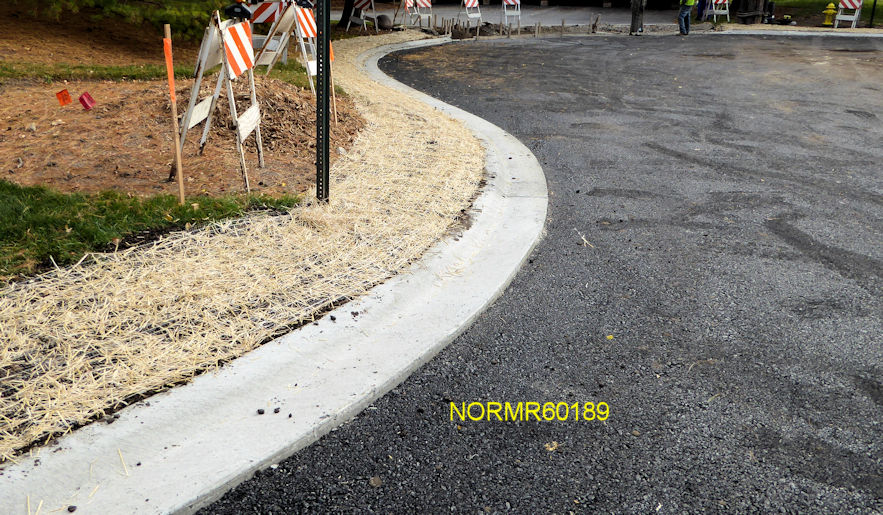
7:30am - Wheaton's trash and recycling contractor was on the property at 6:07am to clear the way for the asphalt trucks. This was as pre-arranged by the association. The street was prepared at 7:15am and the first asphalt truck arrived at 7:33am. Work is beginning at Salisbury which is a more complex paving area. It will then proceed toward Briarcliffe Blvd.


Updates Thursday, October 15 

5:00pm - Driveways are complete, all barricades are down. Notices are posted in the building lobbies, all 44 of them. Bottom line is, we a moving to final street asphalt tomorrow. Equipment has been positioned and this will be a period of intense activity.

10:00am photos - Work on driveways and parking is proceeding:

Everyone is watching the weather radar as the conditions are overcast. Rain would not be welcome at this time:


7:00am/8:00am:
Yesterday early afternoon management did post update notices in the entry foyers of buildings directly impacted. The HOA website was also updated.  Work is proceeding on the driveways.

Update Wednesday, October 14. 10:30am
Well, things did slow down but work it about to resume. Completion of driveways will be next. Then the final street work. The interruption and delay with ComEd has been resolved, I understand. We are all eager for this to be completed. Look for postings in the lobby of your building, and check the official HOA website from time to time. At this point, it is in the hands of the professionals.

Update Saturday, October 10, 2015. Photos 10:30am
Work is progressing well and will continue next week. Multiple notices have been posted advising residents of adjustments to trash and recycling pickup, street parking restrictions and construction updates.

It was a good week. Weather cooperated and the contractor, our management, maintenance and several board members worked diligently to make this as rapid, trouble free project as is possible within reasonable budgets. Additional communication efforts were also made.

Next week should be the conclusion. Of course, this will be determined by weather and breakdowns. Breakdowns? What's that?  For example, with the construction in the area cement is in short supply. Cement is a vital ingredient in concrete which is used for curbs and walks. There was a power outage (two, actually) and this also delayed the work while ComEd researched the problem.


Sample of Photos, October 9, 2015


Update Wednesday October 7, 2015, Photo at 3:46pm
Two notices were posted in the entrance of each building in the construction zone and on every cul-de-sac that connects to Lakecliffe.  One is on the bulletin board and the second is taped to the glass so anyone inside can see it. Additional notices were added to each of the construction signs. This is under the request of the engineer and the contractor. No parking on New Asphalt. No kidding. Towing is probable.


Update Wednesday October 7, 2015, Photo at 8:33am
The binder course is being laid. This is one step of this multi-step process. Another layer of asphalt will be laid in a day or a few.  This new surface cannot be parked on tonight. Notices will be posted in the areas with the new street or the connecting cul-de-sacs. Large signs will also be posted.


Original Post Monday October 5, 2015
The view early this morning.