There are two sides to this. These types of problems are inevitable; they will occur. The only thing we don't know is precisely when they will occur. So it's only responsible to financially prepare for the inevitable, isn't it? This association does plan and prepare, and it raises fees in an orderly way, to assure that it has sufficient reserves and funds for operations. Well, OK, most of the time it does. And it does so because some of those "hard" people are alway pressing to adequately fund our association. People like me.
The alternative is, the board can vote for very low fees, and it will be entirely up to the owners to plan and prepare. That means, leave it entirely up to the owners to manage their finances in such a way as to save a few dollars each month, to be available for problems and special assessments. Then, when we have a problem, such as this, the association can simply "pass the hat" to the owners. Those owners will then willingly and cheerfully dig into the cookie jar and pull out a wad of bills they have saved explicitly for this moment!
Dream on, Norm! What planet am I on?
Last year, our board voted a 0% fee increase. They did so with management's input. Did they jump at the opportunity of a 0% fee increase because that is what they wanted to hear? Or did they do a little bit of independent analysis so they could come to an informed decision? I don't know what they did, because they didn't tell us, the unit owners. But in the end we did get a 0% fee increase. (Note 5).
I had done my research, which included some simple things like the ultimate cost of our roofs and driveway projects. You will recall, the board had voted to proceed with those and if it weren't for delays by supposedly external forces, we would have had 7 driveways repaved last year, in addition to two roofs.
My arithmetic indicated some funding problems with these programs and I did discuss this with some board members. To others, I was and probably still am "persona non grata." (Note 2).
So I began a public campaign to encourage all owners to save the difference between that 0% fee and a small fee, in a cookie jar each month, because I knew we would need it. I "knew" that it would be inevitable for a fee increase at some point in the near future. I was advocating that a prudent owner prepare for it. So, anyone who heeded my words has been doing this and will, I hope, continue to save a bit each month in preparation.
The real point of stating that here and now is I want to use it as an example of my position about unit owner preparedness. I suspect many and perhaps most owners didn't hear my words, or if they did, they simply didn't heed them. I wouldn't be surprised if some of the board at that time reassured owners and told them to ignore me. That's conjecture on my part, but I suspect we are dealing with individual belief systems here. (Note 3).
To return to reality, the question is, which is better? Having the owners each use their own best judgement and save and be prepared, or have the association manage these financial affairs. Some here are arguing that the association is doing a poor job, and the owners would do a better job. A few, I suppose would. But would all? I say they wouldn't and for that reason I disagree with the naysayers. To support my position, I suggest we check the number of owners who are late paying their fees each month. And by how much? Who or whom is late is considered "personal information." However, the amounts are in the monthly accounting records and are available to all owners.
Returning to the immediate issue, there will always be problems of this type. Breaking pipes, falling trees, the occasional unit fire, or roof leak; it's all a normal part of ownership. Rational board members have been arguing for years that we need to adequately fund for these types of breakdowns. Management, for its part added a "contingency" reserve category. That's to allow the board to have somewhere to fund for these problems.
Will there be other failures? Of course there will, and probably more frequently. Why? Because our infrastructure is aging. That's not a big deal, unless our board decides to stick its head in the sand and pretend that we don't need to adequately fund for driveway replacement, garage floor replacement, new trees, roofs and of course, the occasional breakdown. Believe me, it's easy to fall into the trap. All one has to do is listen to their neighbors. The ones who complain about our "high fees." That's "diversion speak" for "we don't need to save or fund our reserves," or "I'd rather spend my money elsewhere and I don't want to put it into this association."
The next time someone tells me that they think they can do it better than the association does, I'll should ask them a few questions:
- Do you currently have $5,000 set aside for a new furnace to replace that 30 old one in your unit?
- Do you have $400 for a new hot water heater to replace that 15 year old one in your unit?
- Do you have at least one month's cash saved up in advance to cover next month's bills, including your association fees?
- Do you have a 6-month "emergency fund" which financial planners recommend, should you suddenly experience a loss of income?
- Are you funding your Roth IRA 100% each year?
- Is your 401K or retirement plan fully funded?
If you can answer "yes" to each of these, then you and I can have a conversation about how you probably are financially prepared, and you are capable of independent financial planning. However, I suggest that most of us are not as prepared as you, and we need a responsible financial plan for this association, and we also need a reliable means of collecting the fees required by that plan.
That plan includes realistic data on the condition of infrastructure, including its age and condition, and a companion document to fiscally and responsibly fund the association in accordance with these plans. Earlier this year the board authorized and paid for a "Reserve Study." It was expensive, but it was decided to be necessary by the previous board. Some of us are now analyzing it and determining the relevance of its merits and conclusions. (Note 1).
That plan includes realistic data on the condition of infrastructure, including its age and condition, and a companion document to fiscally and responsibly fund the association in accordance with these plans. Earlier this year the board authorized and paid for a "Reserve Study." It was expensive, but it was decided to be necessary by the previous board. Some of us are now analyzing it and determining the relevance of its merits and conclusions. (Note 1).
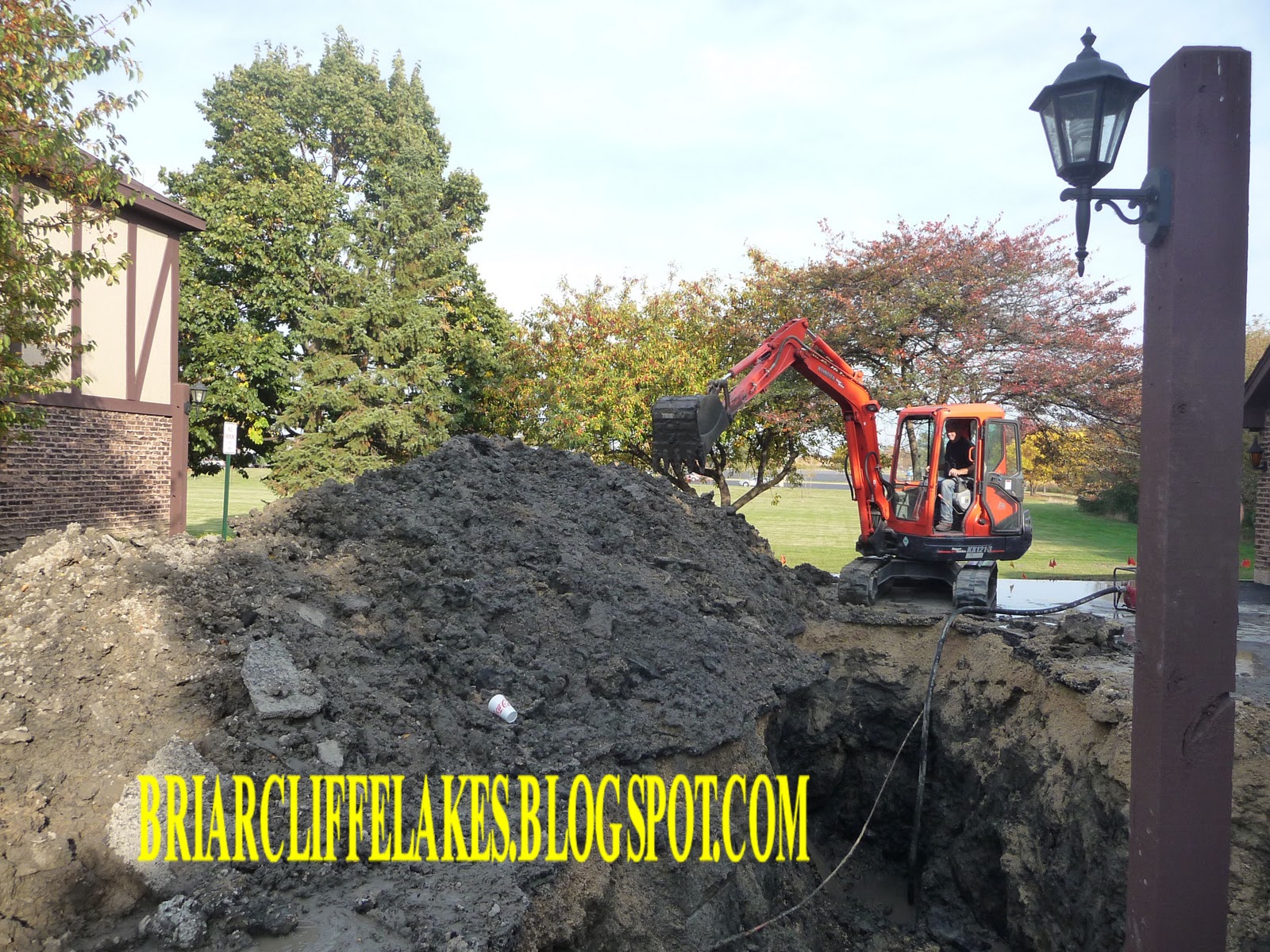
Here are a few more photos take at dusk on October 13.


Comments, Corrections, Omissions, References, Miscellaneous News
Note 1. I was elected to the board and since approximately October 1 I have been doing a serious analysis and review of the "Reserve Study." I have provided two documents to the board, including one of about 3,000 words and another of about 4,000 words, and several spread sheets. I'll be posting more here tomorrow.
Note 2. As the newest and most junior member of the board, I am bound to keep some things in confidence. However, I am also bound to act in accordance with my fiduciary duty. I'll do my best to earn the trust of the board, but some will probably never trust me. I suspect some are simply counting each and every one of my missteps, because this will support any such position regarding my un-trustworthiness, my lack of accuracy, etc. In politics, if you can't discredit a person's position, and the information they present , then one does their best to discredit the person. This is Illinois, after all and most of us have had the opportunity to observe political corruption and incompetence. We'll see what develops here at BLMH.
Note 3. I will be doing my own analysis and I will continue to publish my views here. As a board member, I have some constraints. I don't want to publish all information and in particular, financial information here. It would be inappropriate and won't serve the association on the manner in which I do intend to serve it. I have observed and scrutinized boards here for the better part of three years, I have made some conclusions about individuals because of their arguments and also because of what is not stated to unit owners. I have concluded that in recent years, some board members truly believed our fees were too high and unnecessary. They also believed our professionals were not to be trusted and were doing a poor job. They then began to act out of those personal beliefs, and some board members may continue to do so.
From the perspective of information, a case in point is our association newsletter. It is greatly expanded, but does it really provide more information? Does it prepare owners at BLMH for some of the responsibilities of ownership, for our finances, for the realities of some of this association? I think it could do better. Owners have called for more transparency on the board. The news letter is the perfect vehicle for that. I think some owners would like much more information about the decision making process. I will provide that here, in a responsible way, but I can only go so far and I can't reveal all. I will discuss various sides of the arguments, such as financial planning, project decisions, and so on. However, I can't quote individual board members unless they permit it.
Note 4. Because of the realities of being a member of the board, I will be restrained slightly. So I'll use my best judgement about what is printed here and what is not. I pressed forward with my independent analysis of the reserve study, and produced two letters to the board. That wealth of information was prepared by me and I claim the right to use it in any, prudent manner to the benefit of the association. Some of it will be printed here. I would hope the board also uses it to good purpose.
Note 5. When the time came for a vote, the Treasurer voted "no" for a 0% fee increase. As I recall he was the only "nay" vote. As I also recall, the minutes did not accurately reflect that. The minutes recorded the quantity of votes but did not indicate who, by name, had registered that "nay" vote. This came to my attention later, as I was not present at that particular meeting when the minutes were read and approved. This is a serious oversight. Why? because when the time comes, there will be no accurate historical record of who specifically voted "ay" and who voted "nay." It is possible one or more board members will one day claim that they were the caster of that "nay" vote.
Note 1. I was elected to the board and since approximately October 1 I have been doing a serious analysis and review of the "Reserve Study." I have provided two documents to the board, including one of about 3,000 words and another of about 4,000 words, and several spread sheets. I'll be posting more here tomorrow.
Note 2. As the newest and most junior member of the board, I am bound to keep some things in confidence. However, I am also bound to act in accordance with my fiduciary duty. I'll do my best to earn the trust of the board, but some will probably never trust me. I suspect some are simply counting each and every one of my missteps, because this will support any such position regarding my un-trustworthiness, my lack of accuracy, etc. In politics, if you can't discredit a person's position, and the information they present , then one does their best to discredit the person. This is Illinois, after all and most of us have had the opportunity to observe political corruption and incompetence. We'll see what develops here at BLMH.
Note 3. I will be doing my own analysis and I will continue to publish my views here. As a board member, I have some constraints. I don't want to publish all information and in particular, financial information here. It would be inappropriate and won't serve the association on the manner in which I do intend to serve it. I have observed and scrutinized boards here for the better part of three years, I have made some conclusions about individuals because of their arguments and also because of what is not stated to unit owners. I have concluded that in recent years, some board members truly believed our fees were too high and unnecessary. They also believed our professionals were not to be trusted and were doing a poor job. They then began to act out of those personal beliefs, and some board members may continue to do so.
From the perspective of information, a case in point is our association newsletter. It is greatly expanded, but does it really provide more information? Does it prepare owners at BLMH for some of the responsibilities of ownership, for our finances, for the realities of some of this association? I think it could do better. Owners have called for more transparency on the board. The news letter is the perfect vehicle for that. I think some owners would like much more information about the decision making process. I will provide that here, in a responsible way, but I can only go so far and I can't reveal all. I will discuss various sides of the arguments, such as financial planning, project decisions, and so on. However, I can't quote individual board members unless they permit it.
Note 4. Because of the realities of being a member of the board, I will be restrained slightly. So I'll use my best judgement about what is printed here and what is not. I pressed forward with my independent analysis of the reserve study, and produced two letters to the board. That wealth of information was prepared by me and I claim the right to use it in any, prudent manner to the benefit of the association. Some of it will be printed here. I would hope the board also uses it to good purpose.
Note 5. When the time came for a vote, the Treasurer voted "no" for a 0% fee increase. As I recall he was the only "nay" vote. As I also recall, the minutes did not accurately reflect that. The minutes recorded the quantity of votes but did not indicate who, by name, had registered that "nay" vote. This came to my attention later, as I was not present at that particular meeting when the minutes were read and approved. This is a serious oversight. Why? because when the time comes, there will be no accurate historical record of who specifically voted "ay" and who voted "nay." It is possible one or more board members will one day claim that they were the caster of that "nay" vote.