Updated Surplus Numbers

Updated Surplus Numbers
Updated Surplus Numbers: Actual surplus 2018 per audit was $85,163.
Boards 2011-2018 implemented policies and procedures with specific goals:
stabilize owner fees, achieve maintenance objectives and achieve annual budget surpluses.
Any surplus was retained by the association.
The board elected in fall 2018 decided to increase owner fees, even in view of a large potential surplus

Average fees prior to 2019

Average fees prior to 2019
Average fees per owner prior to 2019:
RED indicates the consequences had boards continued the fee policies prior to 2010,
BLUE indicates actual fees. These moderated when better policies and financial controls were put in place by boards

Better budgeting could have resulted in lower fees

Better budgeting could have resulted in lower fees
Better budgeting could have resulted in lower fees:
RED line = actual fees enacted by boards,
BLUE line = alternate, fees, ultimately lower with same association income lower had
boards used better financial controls and focused on long term fee stability
Showing posts with label Landscaping. Show all posts

Saturday, October 16, 2021

Landscaping is a complex, expensive issue

0 comments

In the period Sept 2010-Sept 2018 Two common area decks were replaced, a bridge and gazebo. All three streams underwent major repairs, benches replaced, hundreds of lawn repairs were made, and hundreds of dead and severely diseased trees were removed and more than 100 drainage problems were addressed.
All required landscaping work.
The above is one of my diagrams April 7, 2013. It was provided to the board
as part of my many property condition reports.
Streams are in blue.
 

Typical rolling berms in our Landscaping

Bookmark and Share

This post will look at the maintenance of landscaping and some of the work completed 2011-2018. I've posted a few photos as examples. This post looks at all of the contractors involved in either creating, destroying, replacing and maintaining the landscaping.  Those contractors operate under a variety of contracts and have differing specialties and skills. "Destroying" is simply a consequence of things like water main breaks, construction, and so on.  Lawns can be damaged and are from time to time.

It is entirely up to the board to determine and authorize the replacements and repairs to damaged landscaping. 

The association covers about 40 acres, which includes 336 units in 44 buildings. The property encompasses one lake and part of another lake. (Note 1). There are three man-made streams with about a half-mile of concrete walks and asphalt streets. Within the boundaries of the association property there are about 15 acres of rolling, grassy turf.  The slope of the property and grading is such that there are hundreds of mounds covered with grass, and each of the streams flow naturally downhill by gravity to a small holding pond. The water collected in each pond is pumped continuously uphill to refill the stream. The property also has (or had) thousands of shrubs and hundreds of trees. The many decisions of how to maintain this and how much money is to be spent doing so is determined by the board. Our ornamentals are about 43 years old, shrubbery has been decimated by a voracious beetle and our ash trees were destroyed by the Emerald Ash Borer.

To deal with this, the association has a Replacement Fund which is accumulated as reserves to provide for annual expenditures to deal with all of the aging infrastructure on the property. That includes landscaping.  Landscaping includes the trees and shrubbery and other plantings. The replacement fund is also required for the streets, all exterior lighting, building entries and halls, driveways, roofs, concrete walks and streams, common area decks and limited common area decks, water mains, fire hydrants, street lighting, etc.

The Role of the Board

The board makes all decisions. Some owners don't realize that, and some boards have been inclined to use management as a shield, perpetrating a myth. 

Regarding landscaping these decisions include tree maintenance, landscaping related contracts, the types of plantings, dealing with the scars left behind after removal of shrubbery and trees,  and so on.

 The board determines where and when to spend the replacement fund/reserves; boards will spend every dollar collected from owners as fees.  Those fees are allocated as approximately 30% toward the Replacement Fund and 70% toward the Operations & Maintenance annual expense (O&M).  It also determines the schedule and priorities for maintenance, which is why our degrading Dover and Plymouth streets had not been dealt with.

The board oversees and directs the experts and contractors.  To provide such direction the board should monitor all of the issues and be well versed in the matters of the association. This requires boots on the ground, but in my experience, most board members don't do this, other than to walk their dogs.

I worked to precision and I can say it was really difficult to be with people who cannot get that. I was not the Landscaping Director and landscaping was never my board responsibility.  I held different positions. As Maintenance Director and Architectural/Projects Director everything impacted landscaping.  I also served a president, and did the newsletter for about 6 years. I was completely dissatisfied with the response of the board to landscaping issues.  I did something about it. 

One board member complained that I was spending "all of the money". Oddly, I was the one who had to complete the roofing project which began during that individual's reign as president. I was also the one who had to deal with the drainage problems that roofing project created, and finally, I was the one who spearheaded the replacement of Lakeliffe.  That street, too, was failing, only about 5 years after it was replaced during the reign of that president.  Etc. Etc.

The board discusses the issues which lead up to decisions during the open part of a 2-hour monthly association meeting. The board does the budgeting and sets the fee levels to be paid by owners. Motions are made and votes cast after open discussion in view of the owners, after discussion with management, the review of reports, surveys, legal, financials and any bids obtained by earlier board directive.  

Upon voting the motion either passes and is carried, or not. 

Because of the complexity of the property, the association board assigns the lead to board volunteers, although this does not remove or absolve the remaining members of board from responsibility.  Keep in mind that in all matters each board member votes "Aye" or "Nay" or may abstain from a vote. The point person for landscaping is the Landscaping Director.  However, other board members are also involved and include, at a minimum:

  • Landscaping Director
  • Maintenance Director
  • Architectural Director
  • President
  • Treasurer

The scope of things that impact the condition and costs of maintaining the landscaping include:

  • Condition of Lawns
  • Condition of Trees
  • Condition of Shrubs
  • Projects that impact the grounds
  • Drainage issues
  • Water main breaks

Board Responsibility for the Outcomes

The condition of the landscaping is determined by the decisions of the board, by what happens on the grounds, the quality of the replacements and plantings, and the care provided. Board response to water main breaks, fire hydrant replacement and dying and dead trees and shrubs determines the appearance of the landscaping.  In the past some boards spent $20,000 per year on partial application of mulch, which promptly degraded and had to be replaced each year. That dollar amount could only do a portion of the property each year. Some boards focused on the North and South entries on Briarcliffe Blvd.  Some boards spent additional funds on the Landscaping at 1825-1827 Briarcliffe Blvd, or at one of the ponds.  It is not required that boards provide owners with reasons for their decisions. The owners assume the decisions are made by a board comprised of fiduciaries are made in the best interests of all owners.

If boards don't publish these decisions in the newsletters, many owners will be unawares of the decisions. Owners who live remotely may be particularly disadvantaged.

To maintain the grounds requires long term financial planning. The reserve studies are a significant and important part of the planning and determine the Replacement Fund.  These studies must be frequently updated with new knowledge and the current reality. Finances change from time to time and this does also have serious consequences. The Illinois Condominium Act places boundaries upon what a board can do and the fee levels for building the replacement fund.  It is a fact that boards will spend all of the money collected. The challenge is to spend it well.  There are differences of opinion about that, and at times personal agendas and belief systems may come into play.  


Analysis precedes action 

I was interested in root cause analysis and determining the weak links in the chain. To do so required many, many reoccurring surveys, lots of analysis and so on.  Then feasibility studies were undertaken to determine if causes could be eliminated and at what cost.  Most of this was prepared by me and most surveys were made with the aid of management and the occasional accompanying board member. Additional attention was paid to identifying potential failures that could result in expensive breakdowns. As a final step, reports were submitted by me to the board during the monthly association meetings and via email.  There are thousands of reasons why fees moderated when I achieved a board position. 

A chain is only as strong as the weakest link

Let me be clear, I am not an advocate of "change for the sake of change", nor am I promoting appearances.  

For example, the newsletter under my direction was never about entertainment and the association is not a social club.  In an association in which fewer than 10% attend any HOA meetings, and some don't have reliable high speed internet access, the newsletter and my presentations during the annual meeting were constructed to inform. I am interested foremost in methods that get better results for our owners and I did take my duties as a fiduciary very seriously.

For board members, who are entrusted with making the decisions to spend more than $ 1 million annually on behalf of their fellow owners, this is even more important. 

There will always be problems. Unforeseen events can occur.  But the question must be asked "Why weren't these problems foreseen?"  Asking that question is not about blame and guilt and I can state that I saw board members pile that upon other board members, sometimes with relish. Bullying is inappropriate. 

The wokes say "be nice" after board members such as myself were knifed. even by some of them.  

I say, be honest and forthright, particularly in communications, don't manipulate the owners and then after doing so, don't hide behind your wokeness.

Poor decisions may be made. We should take responsibility for our actions and clean up any mistakes we make, and learn from them, so as to avoid repeating them. In doing so we can take corrective action. What we learn should be passed on to those who follow. We can convert hindsight into foresight.

It is about is better control of the condition of the landscaping, the infrastructure and the costs to maintain. Controlling costs while maintaining yields the lowest possible fees.

I am not a dreamer, nor am I a fatalist. A realist is somewhere between and I do know my limits. 

As individuals we are masters of our own destiny, we should take responsible actions to manage that destiny. As owners that means monitoring the board and voting during the annual elections.  As individuals it is important that we get the necessary, ongoing education to deal with technology and continuous change. In doing so we are better able to succeed in our endeavors, and deal with the consequences of our actions. 

Good decisions and good maintenance can control fees

The Role of President - Oversight and Leadership

One of the duties of the board president is to set the agenda, keep an overall view, and coordinate maintenance and landscaping directors of the board, as well as involve the treasurer in decisions. Everything costs money. Any maintenance uses owner fees, even if it is imbedded in maintenance contract hours. In the contract there are only so many hours available each year.  

After achieving a position on the board I became aware that at times a board would expend more maintenance hours in a year than provided by contract.  This can occur and certainly the work needed to be done. That was not the issue.  The issue is how boards handled that. 

For example, if there were extreme weather and ice dams on roofs in December, it did have to be dealt with. During extreme snow events, dormer windows might be buried in snow.  This had to be cleared to prevent damage to units when the snow melted. Planned hours could be exceeded and at times were exceeded.

Extreme snow - View from partially buries dormer window

I discovered that some boards decided to roll the excess hours used into the next year.  Imagine a new board discovering in January that they didn't have the maintenance hours available that were expected. That may have helped the budget for the year in which the overage occurred.  However, it reduced the hours available in the following year. New boards were blindsided by this. 

I don't recall any discussions among the board in front of owners in which this directive was issued. 

For example, if the maintenance contract was 4,000 hours and an actual 4,400 hours were spent in a year, the board had two choices: 1) Pay for the excess hours in the year in which they were expended, or 2) Roll the excessive hours into the next year, reducing the hours available. 

Of course, using this example, if a board did roll the hours into the next calendar year, it would reduce the maintenance hours available from 4,000 to 3,600. 

If a board decided instead to pay for those additional hours, there were several choices: 1) Review the budget to see if there was an excess. If not, then 2) borrow short term from the reserves (the Replacement Fund).

Water as an example; Landscaping and stream consumption

In 2012 the water utility bill was about 50% greater than budgeted, about $9,000 more.  The board increased the budget for the following year. In 2013 the water utility bills increased again. They were about 6% greater than budgeted, about $2,000. For the next year the budget for water/sewer was increased by more than 10%.  In 2014 the water consumed was about 30% greater than that increased budget, about $10,000.   Utilities were absorbing much of the O&M fee increases being levied by the board. The rest of O&M increases were attributable to material costs and contract costs.

What was going on with water?  One of the budgeting tasks I took on in 2011 was identifying the possible forthcoming utility price increases and incorporating them into the budgets.  I was not president at the time.  I saw this as simply a necessary duty as part of the budgeting process.

Nevertheless, water consumption was increases, as were the bills. This caused some hand wringing among the board but it was merely a blip in the finances and represented about 1% of the O&M budget.  Of greater concern to me at the time was how was it possible that the association was using so much water?   One obvious source was the poor condition of the streams and ponds. These are filled using city water.  Large cracks and porous bottoms allowed substantial water to escape, which is automatically replenished as the pond level decreases. (See the post of October 4, 2021). Furthermore, water consumption would increase as used for trees during droughts and watering of new grass and sod.  From a landscaping perspective, it is better to let grass go dormant during periods of low rainfall.  However, seed, new grass and sod must be watered.

The best way to deal with the stream issue was to repair and replace the worst sections of the streams.  Which is what was done after completing the roofing project, after replacing Lakecliffe and after replacing about 300 ft. of water mains. 

The Treasurer and reserves 

In fact, the treasurer of 2017-2018 was instrumental in getting this done and did ask "Why can't we finish this in 2018?"  Yes, that would reduce the amount in the Replacement Fund.  Earlier boards had serious discussions about what was a realistic minimum to carry, so there was no need to reinvent that wheel.  However, minimums were discussed, again. The earlier discussions occurred in 2011 and 2012.  The discussions were necessary because of the condition and age of roofs, and the deterioration of Lakecliffe, water main repairs, and the impact of these mega projects on the Replacement Fund..   

The board set a minimum for reserves and even after completing the streams in 2018 we would be funded at least 50% above that minimum value.  Furthermore, the association was collecting between $400,000 and $433,000 each year for the reserves "Replacement Fund."

Planning and Surveys are Important

Here is an example. It is a simple diagram I made as part of a survey of the property in July 2015. It indicates the presence of drainage corrections, tree removal scars, etc.

I had become concerned by the large number of scars on the property, many because of the removal of trees. I have never been the Landscaping Director; simply a concerned board member. 

I prepared this simple diagram and distributed copies to all on the board. It initiated a conversation of what to do and how soon.  Shortly thereafter the problem was addressed. Wood chips and stump remains were removed, the scars were filled with soil and sod applied. Drainage work proceeded and grass was planted or sod installed.  Much of the work was completed by Maintenance.

Landscaping issues - July 2015

The Contractors involved in dealing with Landscaping as directed by the board

A variety of contractors are involved. All must be coordinated and individual responsibilities determined. Contractors involved include:
  • Management
  • Landscaping
  • Arborist
  • Maintenance
  • Specialty including Industrial Plumber, Roofers, Concrete and Asphalt, etc.
Multiple contractors are involved because infrastructure issues impact landscaping. Landscaping may be damaged and require remediation as a consequence of maintenance and infrastructure projects. If a fire hydrant is replaced, it will result in a significant scar which is to be cleaned up, and then grassed over. Water main breaks require clean-up after repairs and frequently require work on damaged driveways and lawns. The mains run beneath grassy areas, driveways and streets.

Removal of trees or dense shrubs results in tangled roots to be removed. After tree stumps are removed there are wood chips to be replaced with soil.  If a driveway is impacted then there is asphalt work to be done.

Boards which ruminate about small landscaping matters often miss the point and repairs or corrective action slows to a crawl.  Consider how a board makes decisions.  It can take months.  For example, if a problem is discovered and it is not an emergency, it will be brought to the attention of the board at the next monthly meeting. If the board is not decisive, a decision will be delayed until the next meeting, and so on.  The board must decide when to address a landscaping issue and by whom and then issue the directive to management. Sometimes the issue simply dies of a lack of attention.  That's how a few years ago 100 landscaping scars had accumulated on the property and a simple landscaping repair after the replacement of a fire hydrant dragged on for a year.

Here is how easily the timelines become extended. An issue discovered after the monthly meeting will be discussed at the next meeting.  If a decision is not made by the board and a directive issued to management then nothing proceeds. Then add seasonal, weather related issues.  Good weather and relatively dry ground which can be worked is usually in the period June through October. That's a 6-month window each year.  Once the first freeze occurs landscaping may be impossible. Once the ground freezes, working the earth becomes impossible, or very expensive. 

Some landscaping cannot be done during the wet season, and grass mat and sod does not do well if spread in August.  Frequent watering is essential at elevated temperatures and dryness and it is possible to burn and kill the new grass.  

Boards which fail to think of tasks as "urgent" and fail to operate with speed are the least effective and successful.  Turning the water mains over to the city is a real world example of this.

Management is intrinsic in the Landscaping.  Management relays observations of owners and contractors to the board and creates all of the work orders to the maintenance contractor, as well as work orders to the arborist and landscaping contractor. Management obtain bids for tasks as directed by the Board. Management should conduct frequent surveys of the property as directed by the board. A board member or members may accompany management, which is a preferred approach.  This provided a fiduciary set of eyes on the property and a direct pipeline into the board.   That facilitates discussions during monthly association meetings. Surveys include condition surveys of streets, garage floors, driveways, streams, common area decks and so on.  Management will create bidder lists which the board may comment upon. Management will provide bids to the board and provide comments and recommendations.   Management is not qualified to perform engineering and project management duties for more difficult projects and does not have the professional liability insurance required of professional engineering firms, nor does it have the credentials.

The board must decide which aspects of Landscaping to direct management to issue work orders to maintenance and which to obtain bids for.   It is not practical to get a bid for each and every landscaping repair. 

The Landscaping contractor has an annual contract.  This contractor mows the lawns, collects fall leaves and trims shrubbery and performs other services in accordance with the contract.  The board may choose to extend special contracts to Landscaping contractor. The work at the north entrance on Briarcliffe Blvd is an example, as is some of the work at the ponds, and at 1825-1827 Briarcliffe Blvd.

The board did obtain bids from the Landscaping Contractor to replace a portion of the dead Viburnum shrubs.  However, the bid was not accepted because it deviated from the requirements. 

The Maintenance contractor has an annual contract with the association.  The maintenance contractor is involved in overall site maintenance. This includes infrastructure, panel and trim replacement on the buildings, deck repairs and replacement, minor concrete and asphalt repairs, minor tuckpointing, street lighting, monitoring the space heaters and temperature of utility rooms, cleaning the gutters of buildings, and so on. The annual contact provides for a specific number of hours in the year. Materials are added.  The maintenance contractor may hire sub-contractors who are more qualified for some work and will get the necessary permits. Additional work includes drainage modifications. Much of this was necessitated by the roofing project 2003-2017. Rotting landscape timbers were replaced with stacked masonry. Benches have been replaced, and so on.   

When a water main break occurs, the maintenance contractor is usually on site, and is involved in the cleanup work, grading, preparation of areas for replacement asphalt, and even sodding over the scar. 


Landscaping in the O&M Budget and Reserves ("Replacement Fund")

The annual Operations & Maintenance (O&M) budget includes a "Landscaping" item, but this item is allocated to several contractors, including:

  • Landscaping 
  • Arborist

The O&M budget includes annual expenses via the landscaping contract, and care of the trees by the arborist. 

The Replacement Fund also has Landscaping categories. Reserves (the "Replacement Fund") are for long term replacement of aging infrastructure.  In the 2017 reserve projections we were unaware of the full scope and costs to deal with the death of thousands of Viburnum shrubs. 

The additional funding prior to the 2018 budget was before the die-out of the thousands of Viburnum shrubs on the property was identified and realized.  It is possible that additional replacement funds will be required.

In 2017-2018 I promoted the removal of these dead, dying and diseased shrubs be replaced with grass. This would maintain the appearance of the property while the board decided upon and allocated funds for a longer term replacement. This has not occurred. 

The 2015 reserve study update with board input allocated $170,639 for landscaping replacements for the entire property for the period 2015-2024. The boards of 2014-2018 were aware of the issue with trees, in particular the ash trees and so funding of reserves was increased. Additional funds were allocated to reserves to deal with identified issues.  In fact, in 2018 the board did obtain a proposal for shrubbery replacement. 

The amounts allocated to landscaping via reserves are determined using the reserve study plus any additional amounts that boards allocate via the yearly budget.  The board can allocate more funds, or less. 

The details of the reserve allocation to the Replacement Fund is contained in the study and revisions.

In fact, the boards did allocate additional amounts, as follows:
  • $122,395 additional in the 2014-2018 budgets
  • $65,954 additional in the 2019-2021 budgets
  • Total budget increases: $188,349
  • Total of additional, 2015 study increase + budgets: $170,639 + $188,349 $358,988.
Boards have full discretion of how reserve funds are spent, and at what pace.  For example, an extra-ordinary amount of work was done in 2017-2018 to complete all stream repairs and complete the drainage projects throughout the grounds, in addition to ongoing garage floor replacements, driveways, street repairs and so on. As a consequence expenditures exceeded income to the reserves.  The boards of 2019-2021  decided not to replace dead shrubbery. 

.Categories for increased funding of reserves:
  • 2014 budget: Additional $18,852 for issues related to condemned fireplaces (funds never used).
  • 2016 budget: Additional $57,739 to deal with trees.
  • 2017 budget: Additional $22,902 reserves for Landscaping issues (dying shrubs).
  • 2018 budget: Additional $22,902 reserves for Landscaping issues (dying shrubs).
The boards of subsequent years 2019-2020 increased the allocations to reserves by the following amounts:
  • 2019 budget: Additional $22,902 reserves for Landscaping issues.
  • 2020 budget: Additional $22,902 reserves for Landscaping issues.
  • 2021 budget: Additional $20,150 reserves for Landscaping issues.
Any reserve studies completed prior to 2017 did not provide for the Viburnum Shrub die-out as a need for fees expenditures, because the problem had not yet been observed. 


Grass mat doesn't work in the shade, and neither does sod


Drainage - Swale cut early in December
Required to funnel new downspout water away from the building entrance.
Landscaped by Maintenance the following year.


Drainage improvement. Clearing root systems
Required by roofing project to carry water away from building entrances

New gutter discharges connected via under ground piping
to a new basin, which fills and flows into the street, 
to carry rainwater to the storm sewer
Prior to grass planting

Heaving Driveway caused by water from relocated downspout which had
flowed beneath the entry walk and then beneath the driveway.  Freezing
caused heaving of the walk and drivesay
 
Failed bench replaced, grass mat and new wall - work performed by Maintenance Contractor

Retaining wall and stone by Maintenance Contractor

Drainage work related to roofing project
Retaining wall, grading and grass by Maintenance Contractor


Stone replacing mulch - permanent solution - work by Maintenance

Drainage tile as part of roofing project - includes landscaping by Maintenance

Willow truck of tree - removed by arborist

Large area after removal of dead ash by arborist, removal of chips and grading by Maintenance, prior to application of sod by Maintenance - July 2014

Ash stump September 2014.
In the period 2012-2018 several hundred diseased, dead and dying
trees were removed. Most grading and replacement grass by Maintenance.


Frequent flooding before grading and new walks
by Maintenance and Concrete contractors.


Aerial view of "Mosquito Glade" in photo above
Part of N. Retzke presentation to the HOA board


Above area after partial grading and surveying by Maintenance
Sidewalk forms partially in place by Concrete Contractor

After Spring rains, same area.  Walks by concrete contractor, all
other work including sod by Maintenance, completed September  2016


Removal of tangled roots - dead tree - by Maintenance


Stream prior to repairs 2016


Steam after repairs, 2016. Grading, stone, sod, deck repairs, etc. by Maintenance

Another view of repaired stream


For more about these projects, click on:  Link to Street Repairs and Projects

For more about those dead Viburnum Shrubs, click on: About those Dying Shrubs

Notes:
1.  In fact, the two "lakes" which are on the association property are part of an easement to the City of Wheaton. The city uses HOA property as part of their water retention system. Not really an equitable situation and the owners of our small HOA are required to deal with all manner of problems caused by the city's upstream retention ponds A, 1 and 2. 


(c) 2021 N. Retzke


Tuesday, September 28, 2021

Zoom meetings - Limitations, Concerns, Impact on owners, and Annual Meeting

0 comments


Zoom Meeting PC Screen

Bookmark and Share

Zoom has become a popular means and method for remote group meetings, spurred by the realities of the CCP Covid-19 pandemic.  The board of the association adapted this approach as a method to comply with legal requirement to hold open Association meetings.  At this time the board could return to open meetings in a public setting they have chosen not to do so. Or, they could the meetings in an open setting and simultaneously use Zoom for remote attendees. 

The monthly meeting was held on September 9 via Zoom and annual meeting was held on September 23, 2021 via Zoom. An agenda was posted by management online for the September 9 meeting. No agenda was posted for the September 23 meeting.

For the annual meeting most of the board was present via Zoom, as were the candidates and a handful of owners.  The Zoom meeting was only about 30 minutes in length.  The main task was about the election, and results were announced. Several questions were asked by owners.  One owner inquired about the torn up landscaping and improvements at the Northern entry. "There have been additional 6 weeks delays in materials." was the board response. There was no discussion of the water main project. As usual, the board could not or would not answer complex questions and so an owner gave up and said "I will email management about this." Such emails are supposed to be included in the monthly packet, but there is no way to know if the board reads them.  Using that approach delays a response by 30 to 60 days.  LOL.

For whatever reasons, it is my understanding that the annual meeting a couple of days ago via ZOOM was attended by most of the board and only a handful of owners who were not board members, or board candidates.  That's indicative of the consequences of a lack of board commitment to robust communications by the board. 

Zoom Open and Equal Access?

Knowing some of the board members, I wonder if management provides them with the computer technology so they can attend these remote meetings.  That raises a question about open and equal access. Boards are prohibited from creating multiple classes of owners. With Zoom, local owners who lack the technology are prevented from attending.  The pandemic is no longer available as an excuse. 

Owners need to provide ZOOM enabled communications technology at personal expense.  This may not be the case for board members, who may have technology and support provided to them by management at owner expense. 

One advantage of Zoom is that it does allow remote owners to attend the meeting. However, it requires a high-speed internet connection, or significant data using a smart phone or tablet.  It also requires appropriate technology. Not all owners have these things. Such technology is an expense for owners. I do wonder if management is providing technology to board members so they can attend Zoom meetings.  It would be more equitable to hold an "open" meeting which owners can attend by driving to the park district as in the past. In addition, that meeting could be broadcast via Zoom. Such an approach would expand access. Those who lack the technology could physically attend while others could simply attend via remote access. 

Clearly, not all board members understand the need for robust communications. Boards are prohibited from creating multiple classes of owners. All owners should be communicated with equally and fairly.  Not all owners attend monthly meetings. For truly remote owners this may be impossible, and it is my understanding that about 25% of the ownership does not live on the property. Some are thousands of miles distant.

For whatever reasons, it is my understanding that the annual meeting a couple of days ago via ZOOM was attended by most of the board and only a handful of owners who were not board members, or board candidates.  That's indicative of the consequences of a lack of board commitment to robust communications and is also indicative of where owners lie with such tech. 

Low owner involvement is an issue for this association. I'm sure there are those on the board who would argue "Why hold an open meeting in a public setting if most owners won't attend?"  How convenient for the board.

Zoom Limitations

Today, with the arrival of ZOOM meetings, it may be easier for all owners to attend, if they have the technology available. However ZOOM also provides a shield for boards.  A common refrain from the board when asked questions is "We'll get that to you." One owner (not me) is still waiting for the financial information she requested nearly two years ago.  

A few years ago I would bring my digital projector and other demonstration aids to the Association meeting. A large white board was available. Owners could be given hand-outs and even copies of the meeting agenda. Today what we get is literally the talking heads. 

I think boards will be more inclined to abuse the closed door "Executive Privilege" portion of the meetings. I can state from personal experience this is considered by some board members to be a convenient way to avoid discussion of certain things in front of owners.  Discussions do include items not on the published agenda. For example, when I was on the board, using the privileged information provided by management to the board in the monthly packet, I prepared a spreadsheet of the state of delinquent owners. It included the number of owners and the dollars delinquent. There were no names, individual lists or other protected information in that sheet. 

I would discuss this as a summary during the open portion of the meetings. Some board members resisted this, preferring to table this information for discussion during the closed door portion of the meetings. 

I'm of the opinion that this is an abuse of the privilege. Owners are entitled as shareholders to know the financial condition of the association and impediments to the financial health. Names, addresses and so on are protected information because the owners involved have specific legal and privacy rights. 

September 9, 2021 Agenda as posted on website by management

BRIARCLIFFE LAKES MANOR HOMES CONDOMINIUM ASSOCIATION BOARD MEETING AGENDA  September 9, 2021 

I. Approval of the August 12, 2021 Meeting Minutes 

II. Treasurer's Report 

III. Work Orders

IV. Sales Report 

V. Correspondence 

a. Architectural request 

b. 2 email correspondence 

VI. Old Business 

a. Front Entrance (in process) 

b. Windowsill (in process) 

c. Paving Schedule (update) 

d. 1661 Dover Ct Foundation repair (update) 

e. Water Main Report (pending) 

VII. New Business (action items) 

a. Insurance renewal (September 1 st) 

b. Tree Removals (Sava Tree) 

c. North Entrance Landscaping Proposal (Clarence David’s) 

d. 2022 – 2026 Landscaping proposal (Clarence David’s) 

e. Management agreement 

 VIII. Committee Reports

a. Rules & Regulations

b. Architectural & Maintenance

c. Newsletter 

d. Landscaping 

e. Welcome

f. Water Main

IX. Homeowners' Comments

X. Executive Session

a. Violation report (hearing for census fine)

b. S621A Leak between unit Legal opinion (Board discussion) 

c. McWilliams (all emails) 

d. Delinquent accounts 

XI. Adjournment

==

(C) 2021 Norman Retzke


Monday, September 27, 2021

North Entry Landscaping Project, Landscaping Issues, and Supporting Budgets

0 comments
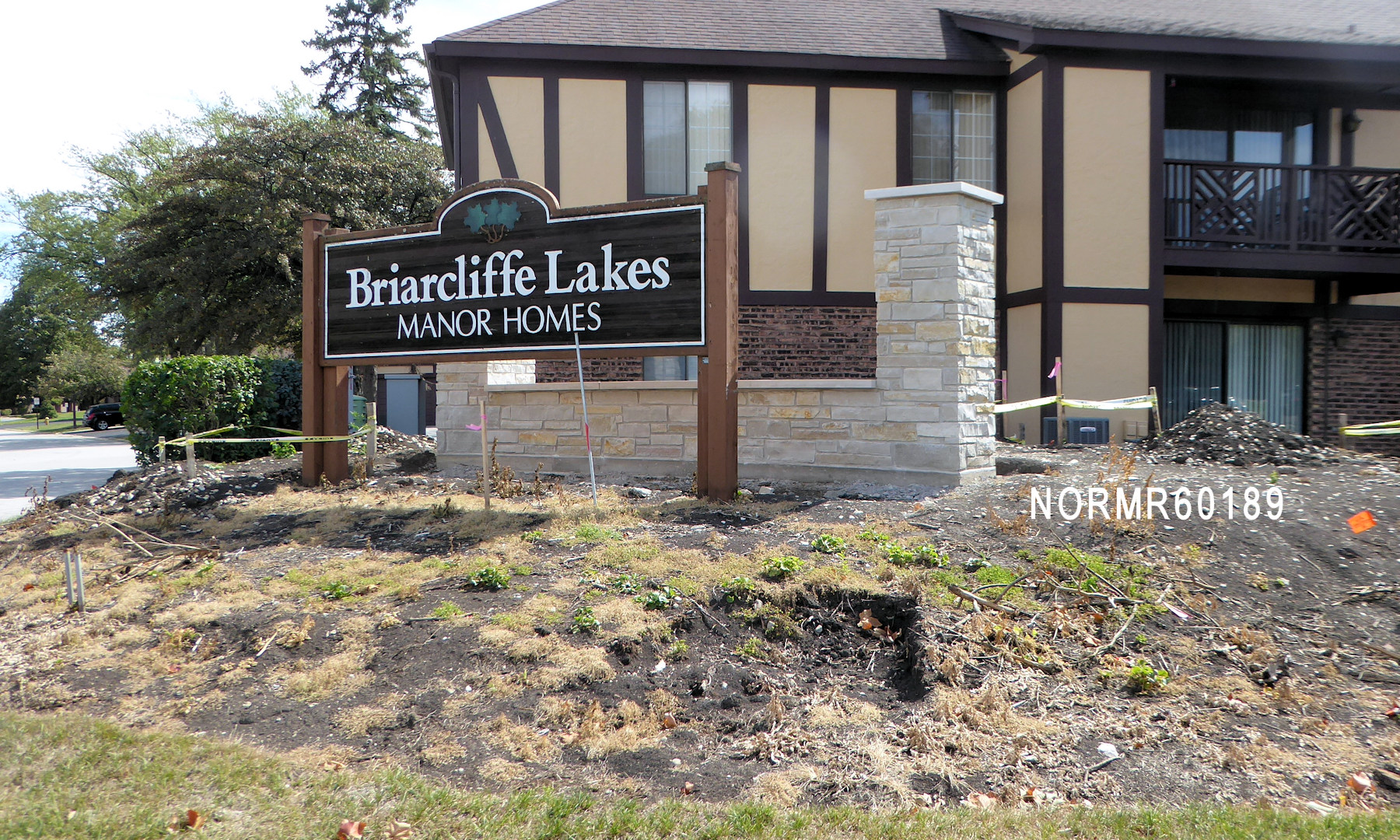
Landscaping after Demolition - South side of north entry -May 2021

Landscaping after Demolition - North side of north entry - May 2021

Bookmark and Share

Before the North Entry Landscaping Project began:


What went wrong at the North entry project?

During the annual meeting one owner inquired about the torn up landscaping and improvements at the Northern entry, and asked about the unusual delays. "There have been additional 6 weeks delays in materials." was the board response.  However, the September 9 agenda included this item: "North Entrance Landscaping Proposal.......".  Apparently the board didn't put all of the pieces of the project into place when the demolition began. It seems it was unable to direct management to purchase the landscaping until the September 9 meeting. 

Work began in May and here we are, 5-months later.  A better approach would be to get the drawings made, get bids, get any permits necessary, order the materials, hire the contractors and then schedule the work as necessary to coincide with material delivery.  That apparently did not happen.

Instead, early in spring the association contractors, as directed by the board via management, demolished both sides of the entry landscaping. 

The delay may also be attributed to permitting issues. But that would be a smoke screen by the board. It is really important for boards to put on their "thinking caps" and ask pertinent questions during the board meetings. The board has not offered any information to owners to justify a 5-month delay.

The new stone entry marker in the photo below is close to the street and the City of Wheaton does have frontage restrictions.  In the photo below the stone monolith is about 18 feet from the Lakecliffe Street curb. The distance to Briarcliffe Blvd is about 35 feet. I don't know if this created a permitting issue, but the board does. 

Situation as of late September

Finances and Fees required to pay for this - from where?

The association budgets do not reveal the actual state of association reserve finances. The budget merely shows the allocation of fees to reserves.  It does not indicate how much was spent in the current year from reserve accounts (the "Replacement Fund").  See Note 1 at the end of this post.

After significant effort on my part and a year of delays I received a copy of the 2018 audit in October, 2020. It indicated the following:
  • $1,057,921 reserve balance 2017 ("Replacement fund").
  • $683,539 reserve balance 2018 ("Replacement fund").
  • $265,765 Operating Fund Balance 2018 (unspent).
  • $939,304 Combined Operating Fund and Replacement Fund balances.
From the above, it can be construed that the boards 2010 to December 2018 did an exemplary job, pushing forward and completing many maintenance and replacement initiatives while controlling fees. Using tight budget controls it seems that a surplus of more than $250,000 was accumulated in the O&M budget. That is money collected, but not spent for operations and maintenance. Kudos to my pro-active board members. (Note 2).

Yet, in October 2018 the board voted for a 1.88% fee increase, completely aware that according to their budget a substantial O&M surplus, about $124,000, had been created by the board that preceded them.

The 2015 reserve study update with board input allocated $170,639 for landscaping replacements for the entire property for the period 2015-2024. That included trees, grass, shrubbery and any other plantings.   According to the budgets provided to owners, during the period 2014-2021 the boards allocated an additional $188,349

There is no specific line item to improve, rather than replace, the entry landscaping. However the board decided to do this in 2021.  That decision and this "improvement" is the subject of this post. 

The board has discretionary power of how to spend the reserve "Replacement Fund". Money can be moved from one category to another.  For example, street funds can be moved to landscaping replacement. 

Boards can also increase annual funding of the reserve categories in the "Replacement Fund" and it is prudent to do so if special issues are identified.  This is why boards added annually to the funding for trees and landscaping in the budgets.

However, the purpose of the reserve funding is the long term replenishment of funds for the Replacement Fund.  For example, the first roof at 1777 Gloucester as part of a large, nearly $1.5 million re-roofing project which began in 2002 is already almost 20 years old. The next phase of the roofing project will begin within 10 years. 

The boards of 2014-2018 were aware of the issues the association faced because of dying and diseased trees.  Our Operating & Maintenance budgets include an Arborist firm for care of the trees. Even if a board does not walk the property and take notes, the board is given status reports as to condition by the arborist. This information is forwarded to the board via monthly Management Packet for each meeting. Pro-active board members do frequently walk the property and take notes, leaving their pet behind. 

As the costs and magnitude of the tree problem was revealed, the boards over the period 2014-2018 allocated additional funds annually to deal with it. The boards increased the funding of reserves allocated to this (the "Replacement Fund"). However, other categories were not reduced. This was not a "rob Peter to pay Paul" situation. Overall reserve funding objectives were maintained. I can't state what occurred in October 2018 to the present because I left the board at the end of September, 2018.

However, even though there are replacement fund categories, precisely how and when reserves (Replacement) funds are spent is solely at the discretion of the board, which is why the replacement of dead shrubbery, or other remediation such as replacement with sod,  was passed over in 2019-2021.

Budgeted Replacement Fund Increases, don't necessarily result in owner fee increases

Here are the board budgeted increases to the the Replacement Fund to address dying and diseased trees. Landscaping related directly to drainage was handled in other categories, including O&M maintenance contract hours. 

It is to be noted that reserves can be increased without raising fees, which is why there was no fee increase to owners in the budgets of 2015 and 2017.  The budget of 2014 included a 1.00% increase, and the 2016 budget included a 1.50% fee increase; from 2014 to 2018 the increases totaled 0.50%.  Furthermore, any annual O&M budget surplus may be moved to the Replacement Fund.  However, because budgets are prepared in October, surpluses in the budget are merely projections and may not actually be realized:
  • 2014 budget: Additional $18,852 budgeted to the Replacement Fund to deal with issues related to condemned fireplaces (funds never used for this purpose, because it was unnecessary).
  • 2016 budget: Additional $57,739 to deal with trees.
  • 2017 budget: Additional $22,902 reserves for Landscaping issues (dying shrubs).
  • 2018 budget: Additional $22,902 reserves for Landscaping issues (dying shrubs).
The boards of subsequent years 2019-2021 maintained the posture of the earlier boards. Replacement fund allocations to reserves were increased above the base reserve amounts:
  • 2019 budget: Additional $22,902 reserves for Landscaping issues.
  • 2020 budget: Additional $22,902 reserves for Landscaping issues.
  • 2021 budget: Additional $20,150 reserves for Landscaping issues.
The reserve studies completed prior to 2018 did not include the Viburnum Shrub die-out as a need for fees expenditures, because the problem had not yet been identified. The problem was noticed in July 2017 as I was walking the grounds. I took photos, the arborist was consulted, and the board and management were notified shortly thereafter.

The budgets do not reveal the actual state of association finances in the reserves, the "Replacement Fund".  The budgets do indicate the allocation of fees each year to reserves.  The budgets do not indicate how much was spent from reserve accounts. 

Only the financial documents including the annual audit, Balance Sheet, Income and Expense Statements, etc. indicate actual reserve fund spending. The annual audits provide additional information, including any transfer of O&M budget surpluses to reserves, or short term borrowing from reserves for O&M expenses. That information is not readily available to owners. For example, it is not on the official Association portal.  (September 26, 2021).

Avoiding dealing with other Landscaping Problems
I have to assume that the boards of 2019-2021 decided to defer dealing with the Viburnum shrub problem, which exists throughout the property. Instead they decided to improve the North entrance landscaping. This indicates a different priority or agenda. It also implies that the board decided there are ample funds allocated in the reserves (the "Replacement Fund") at current fee levels to deal with the dead and dying shrubbery. 

As for the delay to the North entry project, I assume the board presidents 2019-2021 did not provide sufficient board oversite or were perhaps the champions for the new entry landscaping. It seems the Treasurer ignored the reserve studies, and the entire board ignored the die-out of the Viburnum shrubs.  

What will the board of 2022 do? (Elected September 2021)
There are currently three board members with combined board experience exceeding 50 years. They have been, and will continue to be, the motive force on the board and should bear the brunt of responsibility for the issues.  The Landscaping Director did not get sufficient votes to remain on the board. She/he has been thrown under the bus.

Will the three most experienced board members advocate the raising of owner fees to deal with acute landscaping problems? Or will they move funds from streets, concrete and so on to deal with the landscaping replacements?  Will they "kick the can down the road" as some did prior to 2008?

A sampling of the Photos by me, provided to earlier boards:

Fireblight identified in 2018


Dead Tree 2018

Infected and dying Viburnum shrubs July 2017


Allocation of Resources, Board awareness and the Reserve Study
Boards were made aware of the Viburnum shrubbery issue via photos and discussion during association meetings. The problem did not surface until July 2017.  To make future boards as well as all owners aware, the "Guidance" insert of the September 2018 newsletter included this under the item Surveys and Projects: "From 2019-2022, the viburnum shrubbery should be replaced."

The most recent reserve study included this board approved communications exchange with the firm doing the study:

Board Committee: "Items 4.500 and 4.501. In 2016 we expended more than $100,000 for landscaping restoration. We have lost about 100 trees in three years and more are diseased. A substantial amount was expended to remove these trees, some large. In the 2016 budget the association allocated an additional $57,739 for trees and related restoration. The project of 2016 removed scars, did grading, installed turf, removed and replaced trees and  added plantings. This is in addition to the drainage work as part of the current phase of the roofing project. Because of the age of this property, no trees will be planted where water main replacement would damage them. We anticipate an additional $66,270 in 2017-18. About $17,195 in 2019, and similar amounts adjusted for inflation in 2020 and 2021. We can certainly include these expenditures. We will also show a subsequent project [per year] of approximately $17,200  + inflation [commencing] in 15 years. " (Emphasis mine).

In 2016 the board approved these comments. At the time there had been no discussion of improvements to the North entrance, nor were there subsequent discussion in 2017 & 2018 for a replacement of the North Entrance landscaping and signage. 

In 2017 there was no mention in the Reserve Study notes and board comments about the replacement of thousands of dying shrubs, because that need had not yet been identified. The beetle was first identified in July 2017. At the time the full magnitude of the problem was not realized.

I have a concern that the boards of 2019-2020 are pursuing a narrow agenda, preferring to defer the shrubbery replacement while doing less urgent entry re-landscaping.  This board approach may increase owner fees in the future as needed replacement is deferred and the "can is kicked down the road".  Problems will eventually surface as they did in 2008.  

That is similar to the situation I encountered while a board member in 2010.  During eight years I did a lot, but some board members may have a personal agenda. That is why I am no longer on the board.

Cost of grass goes beyond replacement and includes water consumption

Furthermore, the board has returned to the old, ineffective method of covering dead spots or tree removal scars with grass mat.  We shifted to sod in select areas during the period 2014-2018.  If the board insists upon grass mat they could specify a better quality and might get better results. There were good reasons to use sod on our non-level, rolling grounds.  After grading, the placement of sod held the soil beneath in place, and quickly took root. Yes, sod may be more costly, but all of the water to grow grass is costly.. as is the labor to put the hoses in place.

Sod and grass mat each use a lot of water to stimulate growth, so why spend owner fees to water inferior mat?  The association is paying about $5.05 per 100 cu. ft. of city water. A 3/4 inch hose can use 23 gallons per minute. Furthermore, we are paying maintenance workers to string hoses and collect them each day for this purpose. 

Watering for one hour consumers about 200 cubic feet and costs the association $10.10 in water bills.  The association has about 15 acres of green.  A few year ago we had 95 scars under repair. If each scar was repaired and was watered for one hour, once per week the cost to the association for water to grow grass was $960 per week.  Drainage work and repairs require even more grass.  

Our landscaping is complex. I've posted about that in the past. Perhaps it is time to post about the contractors involved, methods and coordination issues.

Too bad the board doesn't read this blog. But then "You can't fix stupid" and it is largely the other 330 owners money that is being spent. Ditto for the owners who pretend they live in an apartment. When I decided no longer to be on the board it was with the realization that I was at best a servant. One can argue the pros and cons, but I had eight years of experience on the board to draw upon when I post here.  I honored all of my agreements and kept my fiduciary duties and commitment. Owners have benefitted. I'll be selling or renting my unit.

Here's a link to the viburnum issue:

Link:  Viburnum Shrub Issue

Dead Viburnums, July 2018, one year after this problem was identified

For a little perspective and history about the landscaping at the association, I suggest one click on the following link.  It will include all posts with the labelling Landscaping which includes the posts about the Viburnum issue already linked, above. Only six posts are visible at a time, and so to view the older posts, one must click on "older posts" at the end of the sixth.

Link: Landscaping Posts

Notes:

  1. I question the accuracy of the "Assessment Income" numbers in the budgets.  For example, the 2020 budget presented to owners showed that 75% of the annual assessments had been collected as of September 30, 2020.  In other words, all owners were current at that time and there were no delinquencies. If anyone reading this checks earlier budgets, they will see that this is consistent.   I do appreciate that management cannot predict the future, so it is not possible to predict with certainty what will occur from October 1 to December 31, each year, pertaining to assessment income. Yet the annual budgets and owner fee adjustments are prepared using September 30 data each year.  The assumption is made that all owners will pay their fees fully and on time. The "Contra" or "Bad Debt" items in the annual financial reports provided to the boards finds this to be inaccurate. 
  2. Many of the projects were described in the official Association newsletters. Here is a link to a blog post which includes a series of links to view 10+ years of newsletters, or download individual PDF copies.  As of 9/27/2021 these are not available at the Association portal. Link:  Click to view or download newsletters

(C) 2021 Norman Retzke

Wednesday, August 28, 2019

Grass - sod, straw mat, erosion control mat and seed

0 comments

Bookmark and Share

One of the challenges on a large property is maintaining the landscaping. Boards are sometimes inclined to take the low cost approach. Boards are also inclined to spend money on entrances and at the two addresses on Briarcliffe Blvd. Of course, the residents at 1825-1827 are all in favor of this. Sometimes the justification is "It is advertising".  However, if the interior is allowed to degrade, or ignored, then I have always taken the position that fancy and expensive treatments on Briarcliffe are possibly "bait and switch".

With rolling grounds, controlling the flow of water to get it to move away from buildings and walks should be a priority, but may not be.

From 2010-2018 maintenance did a lot of work to control the flow of water, reduce the number of "mud pits" and "mosquito glades" on the property. This was an expensive undertaking throughout the property. There were debates on the board. Some favored the use of straw grass mat and seed. I preferred sod.   Grass mat is possibly an acceptable solution if:

  1. The area is predominantly level.
  2. Watering at $5.05 per hundred cubic feet is acceptable. Add labor to this.
  3. Frequent watering and weeding is acceptable during the grass sprouting period, perhaps a month or more. 

Nevertheless, we did try some grass mat. This worked adequately for the Lakecliffe Street replacement project where narrow strips were placed along new curbs. This was done as part of a large single source contract.


Friday, May 31, 2019

About those dying shrubs - communication to owners

0 comments

Bookmark and Share


The previous post was about the most recent association newsletter and the board generated Landscaping Report. That report included the statement that "The bushes along most of our buildings are infected with an Asian beetle. Every hedge must be removed. This will occur in late spring."

The Spring 2019 newsletter article about these shrubs is not the most recent. In fact, the first article about this was written in 2017.  As as the case with many other newsletter articles, I was the "ghost writer" for the August 2017 article.

Here's a link to the previous post:

http://briarcliffelakes.blogspot.com/2019/05/about-those-dying-shrubs.html

Here are the newsletter articles or comments contained in the newsletters from 2017 and 2018. I frequently "ghost wrote" articles with the respective board members permission because had I not done so, there would not have been an article.  Click on the images to enlarge:

From newsletter published in August 2017

From Newsletter published in April 2018

From Newsletter published September 2018 - my final newsletter
Here's a couple of photos I took about this problem in 2017 which were formally submitted to the entire board with the monthly "board packet":