You may have noticed that gasoline prices have been increasing. In December 2009, we were paying about $2.699 for a gallon of regular. Gasoline prices are expected to increase "slightly" this summer. According to the EIA (Ref. 1), gasoline will cost, on average, about 49 cents per gallon more this summer than it did last summer. Their information states that gasoline cost $2.35 a gallon in summer 2009 and is expected to cost $2.84 this summer. These are average prices, and our prices are higher.
The EIA uses April 1 through September 1 as the summer months. Here is a quotation from the report:
"The forecast has the annual average regular grade retail gasoline price increasing from $2.35 per gallon in 2009 to $2.84 in 2010 and to $2.96 in 2011, primarily because of projected rising crude oil prices. Average U.S. pump prices for regular gasoline are likely to exceed $3 per gallon at times during the driving season, and already exceed $3 per gallon in some areas."
Our gasoline prices are higher than the EIA average. Currently (6am today prices), the price of regular gasoline ranges from $2.999 to $3.109 per gallon. In December 2009, we were paying about $2.699 for a gallon of regular. This was a reduction from June 2009 price of about $2.969 per gallon.
Here is a site which features gasoline prices in various zip codes. I have entered the zip 60187. I encourage all residents to purchase gasoline at stations located within our town borders. A portion of the taxes collected returns to the community to pay for our services:
Link to Gasoline Prices Zip 60187
Comments, Corrections, Omissions, References
================================
(Ref. 1) Link to Energy Information Agency Short Term Outlook
2. This information is provided as an aid to those who are budgeting.

Above: Intermittently, for a time, boards informed owners of association finances
Newsletter 2008 excerpt is an example of earlier board willingness to communicate with owners.
The boards of 2019-2021 prefer not to do so.
https://tinyurl.com/BLMH2021
Life and observations in a HOA in the Briarcliffe Subdivision of Wheaton Illinois
Best if viewed on a PC
"Briarcliffe Lakes Manor Homes" and "Briarcliffe Lakes Homeowners Association"
Updated Surplus Numbers

Updated Surplus Numbers: Actual surplus 2018 per audit was $85,163.
Boards 2011-2018 implemented policies and procedures with specific goals:
stabilize owner fees, achieve maintenance objectives and achieve annual budget surpluses.
Any surplus was retained by the association.
The board elected in fall 2018 decided to increase owner fees, even in view of a large potential surplus
Average fees prior to 2019

Average fees per owner prior to 2019:
RED indicates the consequences had boards continued the fee policies prior to 2010,
BLUE indicates actual fees. These moderated when better policies and financial controls were put in place by boards
Better budgeting could have resulted in lower fees

Better budgeting could have resulted in lower fees:
RED line = actual fees enacted by boards,
BLUE line = alternate, fees, ultimately lower with same association income lower had
boards used better financial controls and focused on long term fee stability
Wednesday, April 28, 2010
Sunday, April 25, 2010
Would You Like a $10 Monthly Fee Reduction?
In my ongoing struggle to shift the conversation here at BLMH, I'm going to broach another subject.
Would you like to see a $10 monthly fee reduction? It is possible. However, it will require that our entire board change it's focus from Rule changes, garage and flea markets, coffees, expanded newsletters and so on, to something called "finances".
Some on the board, including our treasurer are already there. Others seem to be clueless.
What would it take to reverse the trend in escalating and increasing fees? What would it take to REDUCE fees? Would that help to increase unit sales? So why aren't we looking at that? It will take a lot more than talk; it will take action. We don't seem up to the task of real change.
Our new board members, and the one existing board member made a 'shoot from the hip' decision to hold fees constant this year. Unfortunately, this was not accompanied by an equal decision to hold the line on the budget. Simply publishing a budget which is a statement that "the budget for 2010 will be essentially identical to that of 2009" won't get the job done. As I recall, 2010's budget is based upon the published budget of 2009, not the ACTUAL expenditures. In other words, it wasn't based on the amounts actually spent in 2009!
How to reduce our fees by $10 a month? It's easy. Just cut expenditures by $40,000 this year. But to do that, the board will have to begin a serious discussion which goes beyond lip service about "scrutinizing" every bill - that was a campaign slogan in 2008. It will have to begin serious discussion about reducing expenditures. And ACTION. However, currently, those on the board who ran on "scrutinizing" have now shifted to "it's only a little bit of money." New items are proposed and discussed, but discussion of costs and impact on budget are avoided by saying things like "wouldn't this be good" and "it's only a little bit of money", etc. Supporters are readily available to make supporting statements to the board and to any unit owners who attend meetings. No one says "this will cost more" except our treasurer. Last year's treasurer objected to some of these conversations for the same reason, and stated so at association meetings.
Yes, talk is really cheap, especially when it is someone else's money.
Do we want to get serious about unit sales? Do we want to do something for all UNIT OWNERS here at BLMH? Good luck, it will be necessary to get the ENTIRE board aligned and on track!
Instead, we now have people telling me that "wouldn't it be good if we had an on-site custodian?" etc. Seems somebody is committed to spending money here. The management tells me we are too small an association for a full time custodian. A unit owner who seems well connected, tells me that we, the association, could purchase a unit or pay the monthly fees of a custodian. Great. Let's reduce the income of the association by about $4,000 each year (that's the custodian's fees we won't collect) AND increase expenditures. Of course, we would have to pay "insurance" for the custodian, his Social Security, taxes, tools, etc. Or, should we just subsidize the business of some "out of work" contractor? Yes, there is a lot of money here at BLMH, and I'm sure there are a lot of under- or un- employed handymen and contractors who would love to land the contact here at BLMH. Perhaps that was the idea behind all of the talk by new board members in 2008 about how we didn't need a professional maintenance company. We could do it with a few "handymen".
Where there is smoke, there is fire, it is said. Seems someone is planning the next "change" here at BLMH.
Comments, Corrections, Omissions, References
================================
1. We have large reserves. It seems that some money will be shifted from that to cover operating expenses. How can that be? The board added "coffee and donuts with the board" this year. We still have a glossy and larger newsletter. We have a new website. There was no vote to increase budgeting for these items, or above 2009 levels. In fact, our budget this year was voted to be EXACTLY as it was to be in 2009 as published in Fall 2008. So how can we spend more and yet not collect more? So where will the money come from? The only possible method is taking it from reserves. I'm still waiting for the details of 2009's actual expenditures, in which some money was spent on landscaping, etc. as part of driveway and roofing (relocated downspouts), etc. I still have no idea exactly how much was spent in 2009. Some work performed in 2009 was possibly billed and paid for in 2010.
2. Our treasurer is an appointee who is experienced from previous boards. One board member ran in 2008 and was elected that year. All others are new for 2010 and have no prior HOA board experience. We have a new appointee who was voted and passed in April's meeting. The open discussion by the board stated he was an employed contractor. That statement also said he would be the Landscaping Director. On that basis the board voted unanimously to appoint. The new Landscaping Director made no statement nor addressed the unit owners who were present. So we can only trust that the statements made by those on the board who promoted him, which includes our CD, were factual in this matter.
3. I'm not proposing an "across the board" or declaration to reduce our fees by $10 per month. What I am proposing is:
Would you like to see a $10 monthly fee reduction? It is possible. However, it will require that our entire board change it's focus from Rule changes, garage and flea markets, coffees, expanded newsletters and so on, to something called "finances".
Some on the board, including our treasurer are already there. Others seem to be clueless.
What would it take to reverse the trend in escalating and increasing fees? What would it take to REDUCE fees? Would that help to increase unit sales? So why aren't we looking at that? It will take a lot more than talk; it will take action. We don't seem up to the task of real change.
Our new board members, and the one existing board member made a 'shoot from the hip' decision to hold fees constant this year. Unfortunately, this was not accompanied by an equal decision to hold the line on the budget. Simply publishing a budget which is a statement that "the budget for 2010 will be essentially identical to that of 2009" won't get the job done. As I recall, 2010's budget is based upon the published budget of 2009, not the ACTUAL expenditures. In other words, it wasn't based on the amounts actually spent in 2009!
How to reduce our fees by $10 a month? It's easy. Just cut expenditures by $40,000 this year. But to do that, the board will have to begin a serious discussion which goes beyond lip service about "scrutinizing" every bill - that was a campaign slogan in 2008. It will have to begin serious discussion about reducing expenditures. And ACTION. However, currently, those on the board who ran on "scrutinizing" have now shifted to "it's only a little bit of money." New items are proposed and discussed, but discussion of costs and impact on budget are avoided by saying things like "wouldn't this be good" and "it's only a little bit of money", etc. Supporters are readily available to make supporting statements to the board and to any unit owners who attend meetings. No one says "this will cost more" except our treasurer. Last year's treasurer objected to some of these conversations for the same reason, and stated so at association meetings.
Yes, talk is really cheap, especially when it is someone else's money.
Do we want to get serious about unit sales? Do we want to do something for all UNIT OWNERS here at BLMH? Good luck, it will be necessary to get the ENTIRE board aligned and on track!
Instead, we now have people telling me that "wouldn't it be good if we had an on-site custodian?" etc. Seems somebody is committed to spending money here. The management tells me we are too small an association for a full time custodian. A unit owner who seems well connected, tells me that we, the association, could purchase a unit or pay the monthly fees of a custodian. Great. Let's reduce the income of the association by about $4,000 each year (that's the custodian's fees we won't collect) AND increase expenditures. Of course, we would have to pay "insurance" for the custodian, his Social Security, taxes, tools, etc. Or, should we just subsidize the business of some "out of work" contractor? Yes, there is a lot of money here at BLMH, and I'm sure there are a lot of under- or un- employed handymen and contractors who would love to land the contact here at BLMH. Perhaps that was the idea behind all of the talk by new board members in 2008 about how we didn't need a professional maintenance company. We could do it with a few "handymen".
Where there is smoke, there is fire, it is said. Seems someone is planning the next "change" here at BLMH.
Comments, Corrections, Omissions, References
================================
1. We have large reserves. It seems that some money will be shifted from that to cover operating expenses. How can that be? The board added "coffee and donuts with the board" this year. We still have a glossy and larger newsletter. We have a new website. There was no vote to increase budgeting for these items, or above 2009 levels. In fact, our budget this year was voted to be EXACTLY as it was to be in 2009 as published in Fall 2008. So how can we spend more and yet not collect more? So where will the money come from? The only possible method is taking it from reserves. I'm still waiting for the details of 2009's actual expenditures, in which some money was spent on landscaping, etc. as part of driveway and roofing (relocated downspouts), etc. I still have no idea exactly how much was spent in 2009. Some work performed in 2009 was possibly billed and paid for in 2010.
2. Our treasurer is an appointee who is experienced from previous boards. One board member ran in 2008 and was elected that year. All others are new for 2010 and have no prior HOA board experience. We have a new appointee who was voted and passed in April's meeting. The open discussion by the board stated he was an employed contractor. That statement also said he would be the Landscaping Director. On that basis the board voted unanimously to appoint. The new Landscaping Director made no statement nor addressed the unit owners who were present. So we can only trust that the statements made by those on the board who promoted him, which includes our CD, were factual in this matter.
3. I'm not proposing an "across the board" or declaration to reduce our fees by $10 per month. What I am proposing is:
- Evaluate all expenditures with the purpose of holding all current spending at or below ACTUAL spending in 2008.
- Eliminate board member "pet projects". Nothing is sacred, except critical services, roofing and driveway projects. If this association is not maintained then property values will decrease.
- Do absolutely nothing to spend additional moneys.
- Create a true contingency fund.
- If this board can demonstrate the will to accomplish the above, then begin a serious undertaking to reduce expenditures and fees.


Imitation is the Sincerest Form of Flattery
Our Association began an upgrade of decks a few years ago. I understand the design was created by our maintenance company, although members of the former board may also have been contributors. As is the case with all things at BLMH, there were a few unit owners who considered our new patio railings to be a waste of money.
However, the board has resisted caving and continues to upgrade to the new style with the current painting cycle.
Our new railings have been copied by a nearby association! Seems someone else sees the merit of the new design. On the other hand, one of the features which distinguished us no longer does. Ahh, the problems of attempting to be unique. There are other ways, and I'm sure our board will attempt find them. Renters at association meetings? Flea markets this summer? Who knows what the future holds?

However, the board has resisted caving and continues to upgrade to the new style with the current painting cycle.
Our new railings have been copied by a nearby association! Seems someone else sees the merit of the new design. On the other hand, one of the features which distinguished us no longer does. Ahh, the problems of attempting to be unique. There are other ways, and I'm sure our board will attempt find them. Renters at association meetings? Flea markets this summer? Who knows what the future holds?

Friday, April 23, 2010
Comments in Norm's Mailbox
April 22, 2010:
I received an interesting email, which strayed into general observations, so I have abbreviated the comment:
"I think one of the main problems in society is that most people sit back and allow others to make decisions for themselves and.....allow others to do the "work" that is needed.......I think everyone should....listen and read what our [leadership is] saying, and stand up and protest and vote them out if need be..... but more importantly....I think more people should run.......and we need more [choices]......."
"What I see [is].....good people - smart people - too busy to run for office and then you have these stupid knuckle-heads that run for office that can barely spell and/or are very corrupt and then we (the people) sit around and say, "wow, did you hear what they're doing?" People mostly complain and do nothing in terms of action (like even voting)....."
I received an interesting email, which strayed into general observations, so I have abbreviated the comment:
"I think one of the main problems in society is that most people sit back and allow others to make decisions for themselves and.....allow others to do the "work" that is needed.......I think everyone should....listen and read what our [leadership is] saying, and stand up and protest and vote them out if need be..... but more importantly....I think more people should run.......and we need more [choices]......."
"What I see [is].....good people - smart people - too busy to run for office and then you have these stupid knuckle-heads that run for office that can barely spell and/or are very corrupt and then we (the people) sit around and say, "wow, did you hear what they're doing?" People mostly complain and do nothing in terms of action (like even voting)....."
Wednesday, April 21, 2010
How Would We Accomplish This?
The above question will be a regular feature on this blog. Topics will vary but the first one will be:
- How Would We Stimulate Unit Sales?
I recently visited a unit which was advertised "For Sale". The purpose of this post is not to comment on the price or amenities of the unit I visited.
What I realized from that visit was that our association had no BLMH marketing or sales materials at the showing. A potential buyer isn't just purchasing a unit. They are purchasing a percentage ownership in a community. Would the nature of that community influence a purchase decision? Would the perspective of the board on maintenance and related issues also influence potential buyers? Individuals in a condominium have no direct control over maintenance of the common elements. We are all at the effect of the association.
As part of the recent financial and housing meltdown, there has been a lot of publicity in the printed press and other popular media about the pros and cons of ownership of real estate in general and that includes condominiums. There has been increased scrutiny. Many stories including implosions in specific markets such as Florida, problems in Chicago, articles or news bits about associations in dire straights or underfunded, home owners who are underwater, discussion of the price bottoming process "are we there yet?", concerns by sociologists, realtors, owners, etc. The consensus seems to be that owners are attempting to sell in a buyers market and at a time when there are many questions and concerns.
Would it be beneficial to all if our association; i.e. the board of managers, addressed this? Should the association get involved, or should we just sit back and hope it all turns out?
If I were to take the position that "something should be done" the first question is what? What would benefit all unit owners including those currently selling? How does an association present itself in this current situation?
The broader question is "how to sell an association." If we assume this is a crowded marketplace, then it is very important to create a distinction. I'm not a marketing or sales person. However, any successful business person knows that to distinguish themselves from the competition, they must create a market or "niche". Would that include advertising, the building of relationships and networking? In the market, what are our advantages? What are our strengths? What are the opportunities that are present to unit owners who live here? How can we address the concerns of buyers? "Find out what is wanted and needed, and then provide that" I was once told.
As part of the recent financial and housing meltdown, there has been a lot of publicity in the printed press and other popular media about the pros and cons of ownership of real estate in general and that includes condominiums. There has been increased scrutiny. Many stories including implosions in specific markets such as Florida, problems in Chicago, articles or news bits about associations in dire straights or underfunded, home owners who are underwater, discussion of the price bottoming process "are we there yet?", concerns by sociologists, realtors, owners, etc. The consensus seems to be that owners are attempting to sell in a buyers market and at a time when there are many questions and concerns.
Would it be beneficial to all if our association; i.e. the board of managers, addressed this? Should the association get involved, or should we just sit back and hope it all turns out?
If I were to take the position that "something should be done" the first question is what? What would benefit all unit owners including those currently selling? How does an association present itself in this current situation?
The broader question is "how to sell an association." If we assume this is a crowded marketplace, then it is very important to create a distinction. I'm not a marketing or sales person. However, any successful business person knows that to distinguish themselves from the competition, they must create a market or "niche". Would that include advertising, the building of relationships and networking? In the market, what are our advantages? What are our strengths? What are the opportunities that are present to unit owners who live here? How can we address the concerns of buyers? "Find out what is wanted and needed, and then provide that" I was once told.
We do have a communications department; that is, we have a Communications Director and a Committee. Certainly the unit owner and realtor can produce their own "sales brochure" for the unit, and in the case of the unit I surveyed, they had. I have a copy. But they can't speak for the association nor can they speak for the board of managers, which is our leadership and knows where we are going. What about the marketing of this association? Why don't we have a "sales brochure" for our association? Would that be useful in promoting sales? Costs of such things are reasonable today and with our committee experts, we certainly have the tools. We supposedly have the people. What's missing?
The questions are:
- Should BLMH have sales marketing materials?
- What information would that include to facilitate or to stimulate sales?
- How aggressive should the association be in this matter?
- Should our Board prepare a "Mission Statement" for inclusion in this brochure or handout? If so, what would be included in that statement?
- What other information should be included in the brochure? In these uncertain times, buyers are discriminating. What about the quality of our reserves? What about the current maintenance plans and programs? What about articulating a 10 year plan?
- Are buyers interested in stability? Do they want information that will assure them that they are making a valid investment? Or, do we simply "hope" they will read all of the documents, prepare a questionnaire of their own and interview management (as I did before I purchased) and so on? I suggest that in the current market environment, buyers are less willing to take on risk.
- I have been told that at one time, there was a waiting list of people who wanted to purchase here. At that time there was no need to produce sales or marketing materials. Times and situations have changed. We have a board largely comprised of people who have expressed a commitment to change, or were nominated by one who does. So, how about some change that will facilitate sales without compromising any unit owners?
- I'm sure we are all aware that our immediate vicinity offers unique lifestyle choices. Are the buyers equally aware? See Ref. (7). We are located at the intersection of two remarkable communities. In our vicinity there are good schools, incredible shopping, a nearby community college with all sorts of inexpensive "adult education" courses, Wheaton College, an award winning Park System, a Forest Preserve system which is second to none, golf, hobbies, the Willowbrook Wildlife Center, the Morton Arboretum, more restaurants than one can possibly afford to visit, not one but two interesting and charming downtowns within about 3 miles, not one but two community libraries, lots of entertainment, including one of the earliest talking movie houses in the country (the nearby Tivoli was the second in the U.S. to have sound, opened in 1928, is a single screen theater which still provides an organ concert on Saturday night and upgraded wide screen 2D and 3D experience at reduced prices). There is also the neighboring Glen Art Theater See Ref. (7) . What more could someone want? Perhaps something is missing?
- Critics of a marketing program or defeatists may say that there are so many homes and condo's in the immediate vicinity that have exactly what we do. That simply isn't true. Such a statement glosses over and ignores the amenities of the association. If my realtor told me that, I'd get a new one. Ref. (7).
- Should such a brochure or materials be made? If so, could it be made available to unit owners "at the cost" of printing? I'm not suggesting another "freebie" for specific unit owners. Not when everyone is pinching pennies. But if a seller wants to do what is necessary, providing additional tools "at cost" would be acceptable, wouldn't it?
- What else should be included in this brochure?
- What else should be done? I'm not suggesting spending fees on special amenities geared to a specific unit owner or owners. I'm not suggesting special plantings, new trees, or special or unusual alterations to make a building or a street more desirable, etc. Such specific improvements or expenses can be discussed by the board of managers during normal association meetings, if they are inclined to spend money to stimulate sales. I also suggest that if owners want special amenities, perhaps the individuals should pay for them, if they fall within general guidelines. For example, special planters and cement objects at building entrances. However, I would expect such discussion to be open and to include a much broader discussion of the entire issue. Bottom line: I'm not calling for the expenditure of association funds here beyond immediate printing costs and those are to be reimbursed by the sellers.
- I also believe this warrants much more than a 5 minute discussion. I suggest this requires a plan.
As it is now, sellers allow the prospective buyer to "fill in the blanks". The prospective buyer, in the absence of information, can make up just about anything they desire about BLMH. For example: There were potholes on Lakecliffe See Ref. (7). last fall and while discussed, they were not repaired. Over the winter they spread and grew. They have now been repaired and our management, FUPM was instructed by the board during April's association meeting to look more closely into the cause of this problem. I believe the intention is to provide a better solution. That doesn't answer the question of why this association allowed Lakecliffe See Ref. (7) to get to that state. Is that significant to buyers? Well, I hate to be the bearer of bad tidings, but everyone who enters our community drives on that street, over the pot holes or into them. That's six months of negative advertising. Are there other examples that are visible when a buyer drives or walks the grounds?
Should our board of managers produce a Mission Statement and state clearly and succinctly what their priorities and commitments are? Would that help? Would that assist unit sales? Would such a statement be consistent with "fiduciary duties"? If it were decided to produce such a statement would that statement include our current practices and programs? Would it include our projected dates for these programs and projected solutions for any visible problems which could be a problem for a potential buyer, etc.?
Would such a Mission Statement go a long way to providing certainty for everyone, buyers and unit owners alike? How about clearly defined statements about accumulating and spending reserves, about policy regarding special assessments, about where this association intends to be in 5 and 10 years, which is the length of our roofing and related projects?
I have gotten comments or have heard comments during association meetings from people who tell me they are unit owners and who have no interest in where this community will be in 5 years. I assure you, each and every buyer is thinking about that future.
If this association is unwilling to express and articulate our commitments, then perhaps potential buyers and even some unit owners may conclude that we have no commitment, that we have no plan and that we may not know where we are going. It really makes no difference that some of us may know what we know i.e. members of the board of managers, that we have a plan, if we are unwilling to put it into writing and present it to potential buyers. Owners are permitted to attend association meetings. Interested buyers or visitors don't qualify. Even if they did, who is going to wait for the next association meeting to get answers to questions? What is more important? Initial impressions? Price? Performance?
In my personal situation, before purchasing, I wrote a long letter with a series of questions not answered in the governing documents, by-laws, financial data and other information I was given. This was mailed to the business manager and we discussed each item, point by point. I then drafted a reply confirming our entire conversation. That was instrumental in convincing me to purchase at BLMH. Why not prepare such a list with answers to present to potential buyers?
With human beings, there is always the temptation to think that "the grass is greener on the other side of the hill." Our competitors include newer associations and single unit homes. They also include "plain Jane" communities, converted apartments, etc. The benefits of BLMH include acres of green space, quality construction using cedar, brick and mortar. The construction methods can reduce unit owner energy expenditure. The roofing project started in 2009 included additional energy saving enhancements, and quality materials and methods which will result in increased appeal and longer roof life; that means a prospective buyer shouldn't have to brace themselves for a new roofing project until 2029 or so. Our buildings are constructed of real plywood, real wood beams and trusses and wooden 2 by 4's and so on. We do not have some of the problems linked to newer construction; for example, the defective wallboard per the Consumer Product Safety Commission, etc. Purchasing here is purchasing a quality, award winning product.
Sounds good, doesn't it? But if we don't tell anyone, they'll never know. Some unit owners at BLMH may not be aware of this either. But prospective buyers have a different perspective. They are not familiar with our property. True, it would be comforting to say "we have just completed our roofing project". We can't; so that is where commitment and assurances come in. There is an expression "Nature abhors a vacuum", which I include to mean that if one doesn't create something to "fill the gap", that something being an expression of who we are, then we allow the potential buyer to decide what to put there. Which would you prefer? Make a commitment or take whatever shows up? I suggest allowing buyers to make up whatever it is, isn't working very well for unit sales.
We live in very uncertain times. I would expect our board of managers realizes that and takes pro-active steps that are commensurate and are in step with the reality we live in.
We can't responsibly redo the property to comply with the wishes of buyers "I'd buy your unit if you faced the lake" or if "that tree wasn't obstructing the view of the waterfall" or "if you had an elevator" or, "if you had a new entry door". I certainly hope the board doesn't fall into that trap; i.e spending association fees to pursue buyers whims. To any buyers who are on the cusp but have a specific issue, as a seller I would say, "Make an offer and put your specific requirement as a contingency in the contract". The owner can then take that to the board for approval and discussion of whom pays for what.
But we can do some marketing and that benefits every seller and potentially all unit owners, at very reasonable cost. We do produce a color newsletter for 336 unit owners about 6 times a year (the even months) See Ref. (7). I've been told during association meetings that this is "only a little bit" of money. So a marketing tool should be easy. Don't misunderstand me I'm not suggesting that we hire a marketing firm; I'm suggesting that our in-house experts on the Board do this.
I guarantee that if I were a seller, I'd be doing some really creative things that go well beyond the normal "dress up and hire a realtor" regimen; something that goes beyond cleaning, painting and adding a new counter top, etc. However, I also know I would not be selling my unit; I would be selling my association. I would produce some of the documents I am proposing. But I can't do that alone and I can't speak for the board. They are as always, the group that must make the commitment.
I did my part by putting this out here. Let's see what the board does. I'll be sending a copy of this directly to them. Of course, if our board chooses not to act, then they are acquiescing the "high ground" to our competition. As I keep saying "it's all a choice". What choice will our board of managers make? You will know soon enough.
==================================
References, Errors, Omissions, Comments:
Should our board of managers produce a Mission Statement and state clearly and succinctly what their priorities and commitments are? Would that help? Would that assist unit sales? Would such a statement be consistent with "fiduciary duties"? If it were decided to produce such a statement would that statement include our current practices and programs? Would it include our projected dates for these programs and projected solutions for any visible problems which could be a problem for a potential buyer, etc.?
Would such a Mission Statement go a long way to providing certainty for everyone, buyers and unit owners alike? How about clearly defined statements about accumulating and spending reserves, about policy regarding special assessments, about where this association intends to be in 5 and 10 years, which is the length of our roofing and related projects?
I have gotten comments or have heard comments during association meetings from people who tell me they are unit owners and who have no interest in where this community will be in 5 years. I assure you, each and every buyer is thinking about that future.
If this association is unwilling to express and articulate our commitments, then perhaps potential buyers and even some unit owners may conclude that we have no commitment, that we have no plan and that we may not know where we are going. It really makes no difference that some of us may know what we know i.e. members of the board of managers, that we have a plan, if we are unwilling to put it into writing and present it to potential buyers. Owners are permitted to attend association meetings. Interested buyers or visitors don't qualify. Even if they did, who is going to wait for the next association meeting to get answers to questions? What is more important? Initial impressions? Price? Performance?
In my personal situation, before purchasing, I wrote a long letter with a series of questions not answered in the governing documents, by-laws, financial data and other information I was given. This was mailed to the business manager and we discussed each item, point by point. I then drafted a reply confirming our entire conversation. That was instrumental in convincing me to purchase at BLMH. Why not prepare such a list with answers to present to potential buyers?
With human beings, there is always the temptation to think that "the grass is greener on the other side of the hill." Our competitors include newer associations and single unit homes. They also include "plain Jane" communities, converted apartments, etc. The benefits of BLMH include acres of green space, quality construction using cedar, brick and mortar. The construction methods can reduce unit owner energy expenditure. The roofing project started in 2009 included additional energy saving enhancements, and quality materials and methods which will result in increased appeal and longer roof life; that means a prospective buyer shouldn't have to brace themselves for a new roofing project until 2029 or so. Our buildings are constructed of real plywood, real wood beams and trusses and wooden 2 by 4's and so on. We do not have some of the problems linked to newer construction; for example, the defective wallboard per the Consumer Product Safety Commission, etc. Purchasing here is purchasing a quality, award winning product.
Sounds good, doesn't it? But if we don't tell anyone, they'll never know. Some unit owners at BLMH may not be aware of this either. But prospective buyers have a different perspective. They are not familiar with our property. True, it would be comforting to say "we have just completed our roofing project". We can't; so that is where commitment and assurances come in. There is an expression "Nature abhors a vacuum", which I include to mean that if one doesn't create something to "fill the gap", that something being an expression of who we are, then we allow the potential buyer to decide what to put there. Which would you prefer? Make a commitment or take whatever shows up? I suggest allowing buyers to make up whatever it is, isn't working very well for unit sales.
We live in very uncertain times. I would expect our board of managers realizes that and takes pro-active steps that are commensurate and are in step with the reality we live in.
We can't responsibly redo the property to comply with the wishes of buyers "I'd buy your unit if you faced the lake" or if "that tree wasn't obstructing the view of the waterfall" or "if you had an elevator" or, "if you had a new entry door". I certainly hope the board doesn't fall into that trap; i.e spending association fees to pursue buyers whims. To any buyers who are on the cusp but have a specific issue, as a seller I would say, "Make an offer and put your specific requirement as a contingency in the contract". The owner can then take that to the board for approval and discussion of whom pays for what.
But we can do some marketing and that benefits every seller and potentially all unit owners, at very reasonable cost. We do produce a color newsletter for 336 unit owners about 6 times a year (the even months) See Ref. (7). I've been told during association meetings that this is "only a little bit" of money. So a marketing tool should be easy. Don't misunderstand me I'm not suggesting that we hire a marketing firm; I'm suggesting that our in-house experts on the Board do this.
I guarantee that if I were a seller, I'd be doing some really creative things that go well beyond the normal "dress up and hire a realtor" regimen; something that goes beyond cleaning, painting and adding a new counter top, etc. However, I also know I would not be selling my unit; I would be selling my association. I would produce some of the documents I am proposing. But I can't do that alone and I can't speak for the board. They are as always, the group that must make the commitment.
I did my part by putting this out here. Let's see what the board does. I'll be sending a copy of this directly to them. Of course, if our board chooses not to act, then they are acquiescing the "high ground" to our competition. As I keep saying "it's all a choice". What choice will our board of managers make? You will know soon enough.
==================================
References, Errors, Omissions, Comments:
- I can't say if we have more or fewer units for sale than surrounding condos and the area in general. Our association does know price performance and similar metrics and has monitored this for all of the nearly 10 years I have been here. During the association meetings I have attended, there are brief conversations on this subject in the presence of unit owners. I have friends and associates who have homes for sale. I am aware of the unusual problems they have been experiencing.
- The real estate agent was personable and gave me a nice hand out. I told the agent that I was familiar with the property and that I was obtaining information for a relative who was considering relocation to the area; my spouse and I are very interested in having them move here. In an earlier post, I put a little more info about that visit. After the walk through, my spouse discussed the unit and what we had seen with our relative. That relative has a buyer for their home and is very much "in action". It remains to be seen if they will come to Wheaton; they are reviewing all of the options. In their case, those options include "to relocate, or not to relocate."
- Do we want potential buyers to "fill in the blanks" and make up something or do we want to guide them in this process and create something about this association? If the potential buyer comes to a wrong conclusion because of the limited information available to them, what are the consequences? If they decide we are "unworthy" the consequence is another lost sale. If they decide we are "worthy" we get a new owner. If they purchase with unrealistic expectations, they will become a dissatisfied unit owner. What are we attempting to create here?
- If I were in the market to sell, I'd do everything I could to "look outside the 9 dots." I would also look at alternatives.
- Here's a "what if" game, Don't use my numbers as typical. They are examples only. What's the monthly mortgage payment on $190,000 with 10% down and 6.1%? It's $1,036 per month. A unit owner says "I can't sell because the buyer says my fees are too high." Really? So how could I offer a buyer a fee decrease? I could drop my selling price. But how much would be required? Let's see how great a decrease in principal would be required to accommodate a $25 reduction in the monthly mortgage payment. A $25 reduction in the monthly mortgage is $1,036 - $25 = $1,011 monthly mortgage payment. To achieve that, I would have to drop my selling price to $185,460. This calculation was made using the New York Times "Rent versus Buy" online calculator. Would I do that? Could I do that? Would I be willing to drop my price 2.4% in order to sell? That's a question only the seller can answer.
- This post is another on my reoccurring and continuing theme which is really a perspective on setting priorities and an inquiry into the real duties and responsibilities of the board of managers. Would you consider what I am presenting here to be consistent with the "fiduciary duties" of the board? Would all unit owners benefit from this?
- Reference (7). I got a comment from an astute reader and made these corrections or expanded the information. Thanks for the feedback. After a conversation about this post, I also made a few changes, all noted by this reference.
Monday, April 19, 2010
More on Roofing Project Review
This is a continuation of a multi-part post on the roofing project which formally commenced at this association in 2009.
There is another component of roofing. That is ventilation. The goal is to minimize attic temperatures as well as reduce moisture accumulation in the attic space, and minimize ice dams.
Here is an "before" picture of the ventilation system. This is typical of most of the roofs (Hint: clicking on the photo will enlarge it):

Here's another view of an "existing" roof and the ventilation system:

Here is a view of the "after" ventilation system on a new roof. This is one of the roofs upgraded in 2009:
 Here is another "after" photo:
 Something seems to be missing. That's because our new roofs include a "roof ridge vent". It isn't simply an appearance improvement. The new style roofs improve ventilation, reducing attic temperatures and moisture and extending the life of the roofs. This is accomplished by adding a ridge line roof vent and by increasing the soffit vent area.
To make this work, the air inlets must also be increased. Proper ventilation requires that air inlet area = air discharge area. This is another example of your fees working for you. This was proposed, championed and accomplished by our former AD and voted and passed by the previous board of managers. The current board of managers is currently evaluating the roofing projects, its components and details and will again decide how to proceed. "The only constant is change" and projects are always under review. New boards must come up to speed.
Our new board seems to be continuing the process. We'll see what the new board decides.
Here is a photo of an unmodified air inlet, under a soffit. These inlets allow fresh air into the attic, which then allows hot air to be discharged through the roof vents. The quantity of soffit vents must be increased, and they must be inspected from inside and outside the roof to ensure that there is not blockage or restriction by interior insulation or paint. In the past, some of this work has been accomplished by our maintenance company, as instructed by the AD and the board. The soffits can be modified during the exterior painting cycle. The roofing project is a large, multi-vendor project requiring coordination of several contractors and project management. This is a "before" photo of a single soffit air inlet vent:

My point here? This is where your fees go. This is where your money goes. This is one example of how maintenance was performed and your fees were stretched by using techniques to extend and reduce overall expenditures on maintenance and to anticipate and eliminate the potential causes of problems in the buildings. These are complex projects which include many choices.
Some aspects of these improvements enhance appearance, which increases "desireability and saleablilty" and others enhance or improve hidden things such as potential life of the roofs, reduced energy consumption, improved ventilation and reduced attic moisture, etc. Ultimately, this reduces monthly fees, owner energy expenditures and if problems are successfully avoided, may also avoid special assessments. There are compromises. The ridge vents reduce roof openings and maintenance issues such as painting of metal vents projecting through the roof, they also reduce staining of the roofs. However, the ridge vents have shingles attached and can sometimes be the source of maintenance issues. Good material selection, proper installation techniques, strong warranties and so on are a necessity but do no occur automatically.
Here's a quick 1 minute video summary of the system and how it works. I had provided a 10 minute video to the previous AD, but this gets the point across, without diagrams, charts or any difficult to understand jargon or technical lingo:
Here's another brief video, which uses "smoke" to show how the vent works and to indicate how air flows into the soffits, through the attic and then out the roof vents. Cooler air is drawn into the soffit vents and then is discharged as heated and moist air through the roof vent:
==================================
References, Errors, Omissions, Comments:
1. Here's part I of a multi-part review of the techniques and rationale of the roofing project which began in 2009. Roofing Project in Review - Post Part I
2. Did you know some of the bathroom vent fans exhaust into the attic space? Yes, indeed, they do. I don't know if this occurs in one building or in 42. I'm speaking from personal inspection. Of course, to do such an inspection, one has to crawl into the attic space. I have done so.
3. All photos are copyright 2010 as noted elsewhere on this blog and are to be copied only with permission.
There is another component of roofing. That is ventilation. The goal is to minimize attic temperatures as well as reduce moisture accumulation in the attic space, and minimize ice dams.
Here is an "before" picture of the ventilation system. This is typical of most of the roofs (Hint: clicking on the photo will enlarge it):

Here's another view of an "existing" roof and the ventilation system:

Here is a view of the "after" ventilation system on a new roof. This is one of the roofs upgraded in 2009:
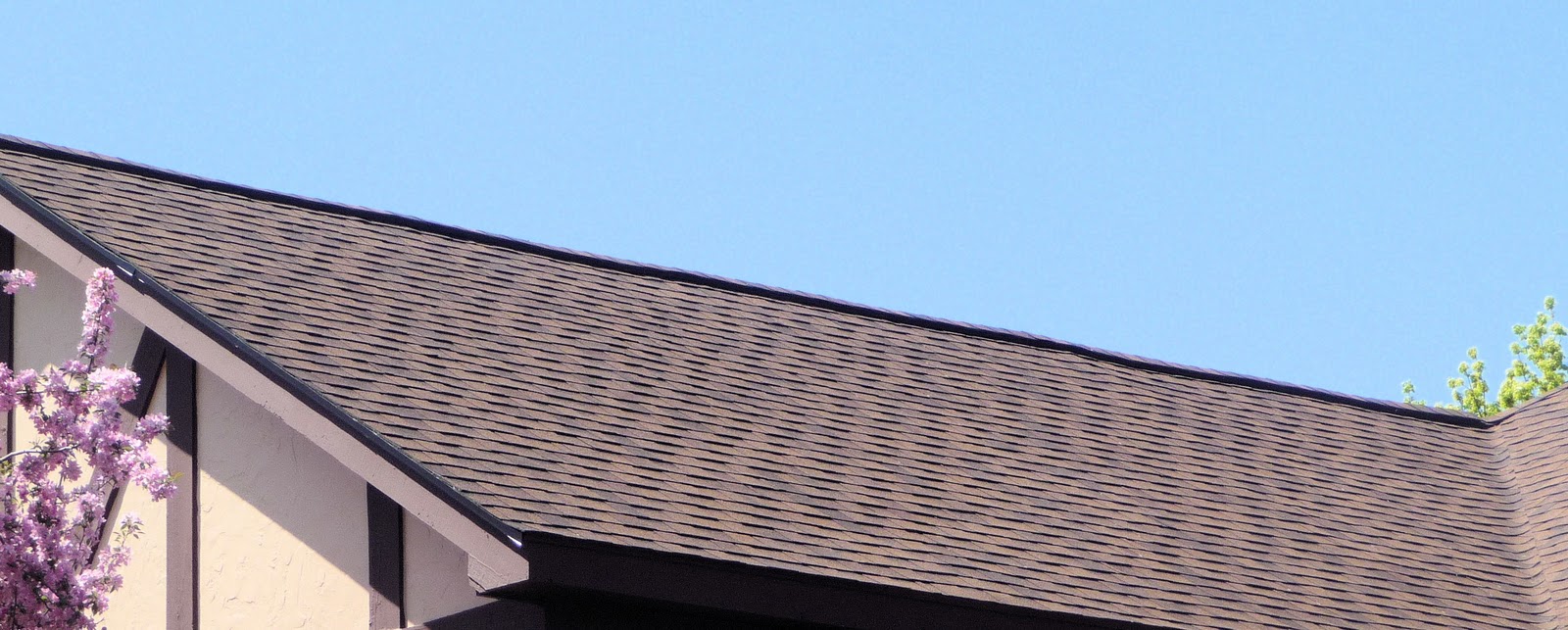

To make this work, the air inlets must also be increased. Proper ventilation requires that air inlet area = air discharge area. This is another example of your fees working for you. This was proposed, championed and accomplished by our former AD and voted and passed by the previous board of managers. The current board of managers is currently evaluating the roofing projects, its components and details and will again decide how to proceed. "The only constant is change" and projects are always under review. New boards must come up to speed.
Our new board seems to be continuing the process. We'll see what the new board decides.
Here is a photo of an unmodified air inlet, under a soffit. These inlets allow fresh air into the attic, which then allows hot air to be discharged through the roof vents. The quantity of soffit vents must be increased, and they must be inspected from inside and outside the roof to ensure that there is not blockage or restriction by interior insulation or paint. In the past, some of this work has been accomplished by our maintenance company, as instructed by the AD and the board. The soffits can be modified during the exterior painting cycle. The roofing project is a large, multi-vendor project requiring coordination of several contractors and project management. This is a "before" photo of a single soffit air inlet vent:

My point here? This is where your fees go. This is where your money goes. This is one example of how maintenance was performed and your fees were stretched by using techniques to extend and reduce overall expenditures on maintenance and to anticipate and eliminate the potential causes of problems in the buildings. These are complex projects which include many choices.
Some aspects of these improvements enhance appearance, which increases "desireability and saleablilty" and others enhance or improve hidden things such as potential life of the roofs, reduced energy consumption, improved ventilation and reduced attic moisture, etc. Ultimately, this reduces monthly fees, owner energy expenditures and if problems are successfully avoided, may also avoid special assessments. There are compromises. The ridge vents reduce roof openings and maintenance issues such as painting of metal vents projecting through the roof, they also reduce staining of the roofs. However, the ridge vents have shingles attached and can sometimes be the source of maintenance issues. Good material selection, proper installation techniques, strong warranties and so on are a necessity but do no occur automatically.
Here's a quick 1 minute video summary of the system and how it works. I had provided a 10 minute video to the previous AD, but this gets the point across, without diagrams, charts or any difficult to understand jargon or technical lingo:
Here's another brief video, which uses "smoke" to show how the vent works and to indicate how air flows into the soffits, through the attic and then out the roof vents. Cooler air is drawn into the soffit vents and then is discharged as heated and moist air through the roof vent:
==================================
References, Errors, Omissions, Comments:
1. Here's part I of a multi-part review of the techniques and rationale of the roofing project which began in 2009. Roofing Project in Review - Post Part I
2. Did you know some of the bathroom vent fans exhaust into the attic space? Yes, indeed, they do. I don't know if this occurs in one building or in 42. I'm speaking from personal inspection. Of course, to do such an inspection, one has to crawl into the attic space. I have done so.
3. All photos are copyright 2010 as noted elsewhere on this blog and are to be copied only with permission.
Subscribe to:
Comments (Atom)